
Episode 233: The Truth About Influencing: Growth, Purpose & Self-Discovery + How to Start a Podcast in 2025

The Truth About Influencing, Growth and How to Start a Podcast With Whitney
Whitney reached out wanting to learn how to podcast, so I got her on the show. We talk about the side of influencing people don't see, building resilience, letting go of perfection and the step-by-step of starting a podcast, from gear and guests to editing and hosting.
What you're influencing matters more than the mic
TL;DR
- Before you start creating, know what you're trying to influence.
- Learn to sit with your feelings instead of always distracting yourself.
- Let go of perfection. Put it out there and improve each episode.
- Start with what's feasible, and expect it to take time before people listen.
- Audio matters, but cheap gear is fine to start with.
Introduction
Whitney reached out because she wanted to learn how to podcast, so I figured the best way to teach her was to get her on a podcast. She spent years in the influencer world from her early 20s, and she's now coming back to putting herself out there in a very different way.
We were meant to talk all about podcasting, and we did, but we went a lot deeper first. Here's what I took from it.
Please note: this blog shares personal experiences for general information only and isn't professional advice. If you're struggling, please speak with your GP or a mental health professional.
Lesson 1: Know what you're trying to influence
Insight: When I hear the word influencer, I ask, what are you trying to influence? A lot of people just want to make reels and be famous.
Whitney thinks the industry has created incredible opportunities and changed a lot of lives. But she'd like people to see more of the side that's often hidden, particularly for people in their early 20s who don't always have the self-assurance or support system to avoid being taken advantage of. Now, in her 30s, she's far more intentional, and she'd love to help others sharpen their focus in ways she didn't have in her 20s.
For me, I do this to change the world, but that world might be one person. If you change one person's view of the world, you've changed the world.
Action: Before you post or start a podcast, write down in one sentence what you want to influence.
Outcome: You have a purpose to come back to when it feels like nobody's listening.
Lesson 2: Sit with your feelings
Insight: Whitney was open about having had a meltdown a couple of days before we recorded. She's working with her therapist on what feelings are and how they impact her.
She has always been able to shrug off the small stuff and intellectualise her way through problems. That works professionally, but she's learning that she doesn't need to run from feelings, outthink them or burn them off with hard workouts. Running and tennis are healthy tools, but they shouldn't be the only ones in her toolkit.
I think a lot of us do the same. As soon as we feel something, we jump on Instagram or TikTok to distract ourselves. That just kicks the can down the road until it blows up in your face.
Action: The next time you reach for your phone to avoid a feeling, pause for a minute and notice what you're feeling.
Outcome: You start dealing with things rather than putting them off.
Lesson 3: Build your track record with yourself
Insight: If Whitney could tell her 20-year-old self one skill to work on, it would be resilience, emotionally, mentally and physically.
She went from relying on external validation to proving to herself she could do hard things. She ran a marathon and set herself goals she never thought she'd achieve. When she starts to doubt herself, she reminds herself of her track record.
Her advice to a room of 100 people was don't sweat the small stuff. In 10 years, you won't remember why you were annoyed for two days. Be present in the moments of joy.
Action: Set one small goal this week you can prove to yourself you'll achieve.
Outcome: You build trust in yourself, one small win at a time.
Lesson 4: Let go of perfection
Insight: The hardest thing is starting. Your first episodes will probably sound terrible, and that's okay. What you think is good doesn't always land, and an episode you didn't rate might hit people perfectly.
You need a minimum viable product. Put it out there, then try to improve on the last episode. After all these episodes, I still feel like I'm learning with every one.
I have an ego about this podcast. I want an episode out every week, and I want it to be the best podcast I can make. That comes from a positive place. If you point that ego at beating someone else's numbers, it might not be the best direction for it.
Action: Publish the thing you've been holding back because it isn't perfect.
Outcome: You learn far faster by doing than by waiting.
Lesson 5: Start with what's feasible
Insight: If I could give advice to the Jack who first started, it would be that nobody's listening yet. It can take around 50 episodes before people start tuning in. That feels rough, but it also means you can stuff up a lot while you get better.
It's like training. If you go hard five days a week straight away, you'll be too sore to move. I've tried doing three and then two episodes a week, but because I don't make money from this, it was too much. I know I can do one a week.
If you work nine to five, try setting aside half a day on the weekend. If you'd rather do something else when a mate invites you out, you might not really want to podcast. Now I spend about eight hours a week on planning, recording, editing and getting it out on socials.
Action: Choose a schedule you know you can stick to, even if it's one episode a month.
Outcome: You stay consistent long enough to see results.
Lesson 6: Keep the gear and process simple
Insight: Audio matters most because it's a podcast. Record in a room without echo if you can. But don't spend a lot of money at the start, because you might do 10 episodes and decide it's not for you. I started with a cheap microphone and recorded on my phone.
Looking back, I would have got guests on sooner. My first guest was Dr James, and I had to re-record it because I did such a bad job. I then spent too long talking to the camera on my own, thinking I'd get better first. If you're nervous about interviewing people, practise small conversations with strangers when you're getting a coffee, and work your way out from the people you're most comfortable with.
For my process, I edit in Premiere Pro, but CapCut is fine to start. I use AI to go through the transcript to find points of interest, timestamps for reels and ideas for Instagram posts. I prepare by doing some research on the guest, but I go in like I know nothing so it's a conversation, not a lecture. Get set up early, charge everything and back up your footage.
For hosting, I use Buzzsprout, which sends the audio to Spotify, Apple Podcasts and other platforms. I upload the video to YouTube and Spotify separately. YouTube gives you much more detail on how long people watch. For reels, in my experience, posting and editing natively in each app seems to get more views than using a tool that posts everywhere at once.
Action: Write down the simplest setup you can record your first episode with this week.
Outcome: You remove gear as an excuse to wait.
Quick wins
- Decide what you want to influence.
- Pause before you scroll away from a feeling.
- Remind yourself of your track record.
- Publish before it's perfect.
- Start with a cheap setup and a schedule you can keep.
Closing insight
What I didn't expect from podcasting is how much self-belief it has given me. It puts a mirror up to you, and watching yourself back is confronting. But over time, all the little flaws you notice stop mattering. Whitney has found the same thing coming back. People want to support you more than you think.
Connect with Whitney
You can find Whitney on Instagram at whitney.untethered.
Listen to the full episode
The full conversation is on Spotify, Apple Podcasts and YouTube, or press play at the top of this page.
Related episodes: Most People Quit Right Before It Starts Working and Stop Giving Advice to Your Younger Self
Show notes
In this episode of The True Form Podcast, I sit down with Whitney for a raw and real chat about life behind the screen. From the highs and lows of building a personal brand to the struggles of starting over in your 30s, this one dives deep into growth, identity, and learning to live on your own terms.
We also chat through the step-by-step of launching a podcast in 2025, what we’d do differently, and why being consistent matters more than having the perfect mic setup.
🎙️ Topics we cover:
✅ What it’s really like being a full-time content creator
✅ Rebuilding your identity after burnout or big life shifts
✅ How to tune out external noise and reconnect with purpose
✅ Whitney’s journey into therapy, healing, and redefining confidence
✅ A beginner’s guide to launching a podcast (what works in 2025)
✅ Honest thoughts on growth, rejection, and starting fresh
Whether you're a creator, thinking of launching your own podcast, or just figuring out who you want to be—you’ll take something from this one.
🎧 Listen now on your favourite podcast platform or watch the full convo here on YouTube.
Watch me on YouTube
https://youtu.be/DkWW2DbU_ik
Listen to the True From Podcast
https://trueform.buzzsprout.com
Follow me on Instagram
https://www.instagram.com/jack.lgraham?igsh=Y2tranE0NDJjN2gz&utm_source=qr
More like this

What Every Woman Over 35 Needs to Know About Her Body With Emily Spurling
Women over 35: if you're eating less, training harder, and getting nowhere, the problem isn't your willpower; it's your physiology. In this episode of The True Form Podcast, women's health coach Emily Spurling breaks down exactly what changes in a woman's body after 35, why corti

Allie Chandler: Healing Chronic Lyme, Rewiring the Nervous System & Empathy-Led Marketing
Allie Chandler spent nearly 8 years bedbound with chronic Lyme disease, mould toxicity, and hyperadrenergic POTS; a condition where her heart rate spiked from 55 to 180 every time she stood up. Dozens of doctors. Endless protocols. No answers. In this episode, Allie shares exactl
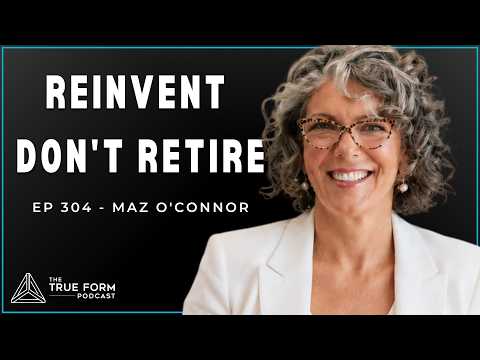
Maz O'Connor: Reinvent, Don't Retire. Why Your Best Years Are Still Ahead
It's never too late to start. At 55, Maz O'Connor had built the life she'd manifested 15 years earlier: a beautiful home in coastal Victoria, her own yoga and event space, a thriving community. By every external measure, she'd made it. Then a voice she couldn't ignore said: there