
Episode 230: Heal Your Gut, Balance Your Hormones & Sustainable Weight Loss with Ashleigh Jade

Sleep, Hormones and Simple Nutrition With Ashleigh Jade
Ashleigh Jade went from personal trainer to functional health nutritionist. She answers your questions on where to start, tracking food without obsessing, training around your cycle, protein timing for busy people and the one habit she'd make everyone in Australia start tomorrow.
Strip it back, control the controllables
TL;DR
- If Ashleigh had to pick one place to start, it's sleep.
- Tracking food can be a great teacher, but don't let an app set your calories.
- Train based on how you feel. Use effort, not just the numbers on the plates.
- Hit enough protein across the day instead of stressing about a 30-minute window.
- Put the phone down. It might be the biggest stress you can remove.
Introduction
Ashleigh Jade started out as a personal trainer at 18, working in a corporate gym. A few years in, she saw the missing piece. Clients were moving, but they weren't sure what to eat, or why they weren't losing weight. So she studied nutrition and is now a functional health nutritionist, working with people face to face and online.
In this episode, Ashleigh answers your questions and reacts to a couple of reels you sent in. We cover sleep, tracking, training through your cycle, protein timing and building habits that stick. Her message comes back to the same thing every time. Strip it back and focus on the basics.
Please note: this blog is for general information only and isn't medical or dietary advice. Please speak with your GP, a dietitian or another qualified health professional before changing your diet, supplements or training, especially if you have any symptoms or health conditions.
Lesson 1: Sleep first, but get moving too
Insight: I asked Ashleigh where someone should start if they're new to health and fitness: sleep, nutrition or training. She picked sleep. It's where your body recovers. If you're not sleeping, everything else, from digestion to training, gets harder.
Her tips are simple. Get natural light at sunrise and sunset, and put your phone down so your body can switch off. Have a routine for going to bed.
I still lean towards training first, because it gives people instant feedback, and it's hard to convince someone that a good night's sleep feels good when they haven't had one in a while. Ashleigh agreed it can help. If you're not moving during the day, training can help set a routine for sleep.
Action: Pick a time to put your phone away tonight, and get outside for some morning light tomorrow.
Outcome: You give your body the best chance to recover, and everything else gets easier.
Lesson 2: Use tracking to learn, not to punish yourself
Insight: Ashleigh thinks nutrition is like learning a new language. With every diet being thrown at us, it's easy to forget the basics: knowing how to build your plate and what protein, carbs and fats actually are.
She likes tracking because it teaches you what a portion actually looks like. That works both ways, showing whether you're eating too much or too little. She uses MyFitnessPal, but doesn't let it set calorie targets. When people ask to lose two kilos a week, apps can suggest very low calorie targets that leave people feeling like they're doing everything wrong.
She also only tracks calories consumed. Adding calories burnt from a watch makes it confusing, and you're putting a lot of trust in an estimate. She's been there, with spreadsheets tracking every step and session, and said it ruined the enjoyment of health and fitness.
Action: Track what you eat for one week, purely to learn, without trying to change anything yet.
Outcome: You build an understanding of your food without the stress.
Lesson 3: Check in with yourself before your data
Insight: We've both worn a Whoop. Ashleigh's advice is to check how you feel when you wake up before you look at any data. If your app tells you you're tired, you'll probably feel tired, even if you didn't before.
She still finds the data useful for spotting when she's run down or getting sick. I wore mine for about two years and reached the point where it wasn't telling me anything new. I don't need technology to tell me I had a night out.
Ashleigh thinks wearables can be great for building routines in the first six to 12 months. Once the habits are part of your life, you might not need them as much.
Action: Tomorrow morning, rate how you feel out of 10 before checking any device.
Outcome: You trust your own body more, and use data as a tool instead of a verdict.
Lesson 4: Find your why, then habit stack
Insight: For Ashleigh, discipline is what you do day in, day out, regardless of how you feel. Motivation comes in waves. To find your why, think about what gets you up in the morning, and picture the person you want to become and their daily habits.
With clients, she uses the "five whys". I want to get fit. Why? Because I want to feel better. Why? Keep going until you reach the emotional reason behind the goal.
Then she breaks the goal into daily habits and ticks them off. Once one is automatic, she adds another. That's habit stacking. If you make a coffee every morning, put your supplements next to the coffee machine. If you forget breakfast for work, put it next to your keys.
Action: Pick one new habit, and attach it to something you already do every day.
Outcome: New habits stick because they ride on the ones you already have.
Lesson 5: Train on how you feel
Insight: A listener sent in a reel about a review of studies looking at whether the menstrual cycle affects strength. Ashleigh doesn't see a big link. She says it's very individual. She's had some of her best sessions on day one of her cycle, when the internet would tell her to rest or do light yoga.
I think research like this can put people off training. Whether you're male or female, young or old, you'll have good and bad days. Most of us aren't athletes, so week-to-week strength doesn't matter. Track your numbers over 12 months to make sure they're slowly going up.
Ashleigh suggests using effort, or RPE. If your goal is to lift something that feels like an eight out of 10, that might be a 10-kilo plate one week and a 20 the next. Match the effort, not the number.
The same goes for anyone having bad days through menopause. Moving will most likely help your mental health, and you can adjust your training to how you feel.
Action: For your next session, rate each set out of 10 for effort instead of chasing a number.
Outcome: You keep training consistently, even on the tough days.
Lesson 6: Don't overcomplicate protein timing
Insight: Another reel suggested women need specific amounts of protein and carbs within a tight window before and after training. A listener said that wasn't possible with their busy life.
Ashleigh's view is that most of us aren't athletes. As long as you're eating enough protein across the day, don't stress about the window. Your body sees what you do on average over the week and month, not minute by minute.
Her practical tips are to keep a protein shake or bar in the car for after training. If you train early and can't face breakfast, have half a banana or some dried fruit.
A lot of advice online is aimed at a small group of high performers, but everyone sees it. Strip it back, do the basics and control the controllables.
Action: Prepare one easy, high-protein snack to keep in your bag or car this week.
Outcome: You fuel your training without adding more stress.
Lesson 7: Put the phone down
Insight: I asked Ashleigh what one thing she'd make everyone in Australia do tomorrow. Her answer was to put the phone down. An hour before bed, while you eat, when you're with friends and on a walk.
She thinks it's the biggest constant stress we have, and stress affects your sleep, training and nutrition. She admits she's guilty of it too, often feeling like a walk without a podcast is wasted time. Her challenge is to put the phone away for one of your walks and see if it makes a difference.
Action: Eat one meal today without your phone or TV.
Outcome: You give your body a chance to rest and digest.
Quick wins
- Get some morning light.
- Track to learn, not to restrict.
- Check in with yourself before checking your watch.
- Attach one new habit to one you already have.
- Leave your phone behind on one walk.
Closing insight
Ashleigh's message runs through every answer. Nutrition, hormones, training and sleep can feel overwhelming because of all the information online. But most of us don't need perfect timing or a complicated plan. We need to sleep, eat balanced meals, move and reduce stress. When you strip it back, you give your body the best chance to feel good.
Connect with Ashleigh
You can find Ashleigh on Instagram, where she shares tips and how to work with her.
Listen to the full episode
The full conversation is on Spotify, Apple Podcasts and YouTube, or press play at the top of this page.
Related episodes: Listener Q&A: Supplements, Metabolic Age, Calories and Motivation and Mic'd Up With Jess: Yoga, Mindful Eating and Finding Balance
Show notes
In this episode of The True Form Podcast, I chat with Ashleigh Jade, a Functional Health Nutritionist passionate about empowering people to understand their bodies and achieve sustainable, healthy lifestyles.
Ashleigh shares practical advice and powerful insights on:
✅ Gut Health: Why a healthy gut is the foundation of your well-being, and actionable tips to improve your digestion naturally.
✅ Hormone Balance: How hormones influence your overall health, weight loss goals, mood, and energy levels—and how to balance them through nutrition and lifestyle changes.
✅ Sustainable Weight Loss: Ashleigh’s holistic approach to shedding weight naturally without quick fixes or restrictive diets.
✅ Understanding Your Body: The importance of education and self-awareness in creating lasting health improvements.
Whether you're experiencing gut issues, hormone imbalances, struggling with sustainable weight loss, or simply want to feel your best, Ashleigh provides easy-to-follow guidance and strategies that you can implement immediately.
🎧 Listen to the full episode now or watch on YouTube to start healing your gut, balancing your hormones, and taking control of your health today!
Watch and comment on the episode on YouTube:
https://youtu.be/G91N-EUbrJQ
Listen Everywhere
https://trueform.buzzsprout.com
Work with Ashleigh:
Website: go.ashleighjade.com/services
Instagram:
https://www.instagram.com/coach_ashleighjade?utm_source=ig_web_button_share_sheet&igsh=ZDNlZDc0MzIxNw==
More like this

What Every Woman Over 35 Needs to Know About Her Body With Emily Spurling
Women over 35: if you're eating less, training harder, and getting nowhere, the problem isn't your willpower; it's your physiology. In this episode of The True Form Podcast, women's health coach Emily Spurling breaks down exactly what changes in a woman's body after 35, why corti

Allie Chandler: Healing Chronic Lyme, Rewiring the Nervous System & Empathy-Led Marketing
Allie Chandler spent nearly 8 years bedbound with chronic Lyme disease, mould toxicity, and hyperadrenergic POTS; a condition where her heart rate spiked from 55 to 180 every time she stood up. Dozens of doctors. Endless protocols. No answers. In this episode, Allie shares exactl
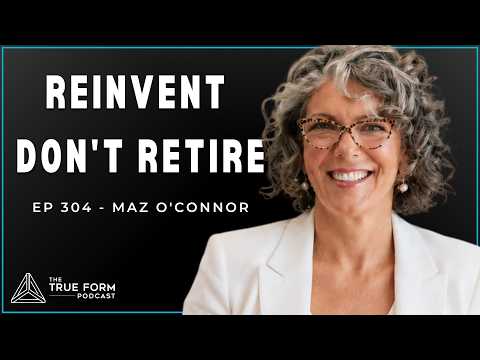
Maz O'Connor: Reinvent, Don't Retire. Why Your Best Years Are Still Ahead
It's never too late to start. At 55, Maz O'Connor had built the life she'd manifested 15 years earlier: a beautiful home in coastal Victoria, her own yoga and event space, a thriving community. By every external measure, she'd made it. Then a voice she couldn't ignore said: there