
Episode 227: Ask Me Anything - Tips to Stay Consistent, Build Habits, and Boost Your Health

Listener Q&A: Supplements, Metabolic Age, Calories and Motivation
In my first solo Q&A of the year, I answer your questions on why I'm learning Korean, the supplements I take, the meaning behind True Form, what metabolic age really means, finding a good calorie intake and the difference between motivation and discipline.
Your questions on training, nutrition and mindset, answered
TL;DR
- Focus on whole foods first. Supplements are there to fill the gaps.
- Try supplements on and off so you know whether they're actually helping you.
- Metabolic age is only one part of the picture. How you feel and move matters more.
- Start at your maintenance calories for three months before cutting.
- Motivation is a feeling. Discipline is an action.
Introduction
This was my first Q&A of the year, and my first one solo. Big thanks to everyone who sent in a question. Here are the answers, plus a few thoughts I've been chewing on since.
Please note: this blog is for general information only and isn't medical or dietary advice. Please speak with your GP, a dietitian or another qualified professional before changing your diet, supplements or training.
Lesson 1: Learn something that stretches you
Insight: Jenny asked why I'm learning Korean. I've always wanted to learn another language, and Korean seemed like one of the easier ones that doesn't use our alphabet. It works my brain in a completely different way.
It's also helping my speech. As Aussies, we spend our whole lives abbreviating everything and using as few facial expressions as possible. After moving to Melbourne, I realised how much I needed to improve. I want to have guests from all over the world, and I want them to understand me.
Action: Pick one new skill that challenges your brain and practise it for 10 minutes a day.
Outcome: You keep your mind sharp and grow in unexpected ways.
Lesson 2: Food first, then test your supplements
Insight: Alex asked what supplements I take. Nothing crazy. My main ones are protein powder, fish oil and creatine. Every now and then I'll trial something else, including magnesium for sleep.
I usually take a new supplement for about two months, come off it and maybe go back on to see whether I notice a difference. Supplements don't work the same for everyone, so you might be taking something every day without getting much from it. Above all, focus on getting what you need from whole foods. Supplements are there to supplement.
On music, Kimberly asked what I listen to while working out. It depends on my mood. Personally, I find music that gets me hyped gives me an extra bit of grit in the gym, so listen to what you like, even if nobody else does.
Action: Write down why you take each supplement, and consider a break from one to see if you notice any change.
Outcome: You spend your money on what actually works for you.
Lesson 3: Your metabolic age is just one number
Insight: I posted a body composition scan from the gym, and my metabolic age came out about 10 years younger than my real age. Someone asked what that actually means.
It looks impressive, but it's only part of the story. One of my older clients scanned about 15 years younger than his actual age, but he struggles to get up off the ground. His number on paper didn't match how he moves.
These scans still give you far more information than standing on the scales, which can't tell you whether you've lost fat, muscle or something else. They may not be the most precise option out there. A DEXA scan is more accurate, but it costs a lot more.
What matters more is whether you feel good, have energy, move without pain, can do the things you enjoy and wake up ready to smash the day.
Action: Write down three things you want your body to be able to do, and track those alongside any numbers.
Outcome: You measure your health by how you live, not just what a scan says.
Lesson 4: What healthy strength looks like
Insight: Rowland asked how strong you need to be to be considered healthy. I think it depends on your definition of healthy. For me, it's whether you can do the things you like, move without pain, have energy through the day, and get back up if you fall. Can you run, jump and have a good conversation?
Strength plays a big part. If you trip, can you catch yourself? If you fall, can you push yourself back up and walk it off? So ask yourself what health means to you. Is it lifting your kids or grandkids, running around with them or having the energy to hang out with them all day?
Action: Define what healthy means for you in one sentence.
Outcome: You train for the life you actually want.
Lesson 5: Find your maintenance calories, then go slow
Insight: Laura asked how to find a good calorie intake after seeing online advice recommending big deficits. My first piece of advice is to stop looking around online. Pick one approach and stick with it long enough to get results, which means at least three months.
A body composition scan can give you a good starting point for your maintenance calories. If you don't have access to one, an online calculator using your height, age, weight and activity level will give you an estimate. Say it's 2,000 calories.
Most people jump straight down to 1,500. I'd stay at maintenance for three months first, because many people don't actually know what they're eating. After that, if your goal is weight loss, try bringing it down by about 100 to 200 calories every fortnight. If you start feeling hungry, sluggish and low on energy, that's probably low enough.
I know that's slow. But rapid weight loss often leads to rapid weight gain. Play the long game, and keep lifting weights two or three times a week, along with cardio and mobility.
Julian asked about a two-month "shred". It's doable, but it comes at a cost. You'll likely need to count your calories, prioritise protein and run a bigger deficit, which usually means feeling hungry and low on energy. For a short-term goal like this, I'd recommend getting personalised guidance.
Action: Find your estimated maintenance calories and track them as closely as you can for three months.
Outcome: You know where you're starting from, so any changes actually mean something.
Lesson 6: Motivation is a feeling, discipline is an action
Insight: Someone asked whether "What's the difference between motivation and discipline?" is now my go-to podcast question. When I ask guests a question, it's usually because I want to know the answer myself. I'd encourage you to do the same. Don't take a guest's answer as gospel. Think about it, then decide whether you agree.
Matt, who was on the podcast recently, had one of the best answers. He said motivation has become a buzzword, almost a sales word, and that you don't need motivation if you're doing something you enjoy.
Since then, I've been thinking about it like happiness and being nice. Happiness is an emotion. It's awesome when it's there, but it isn't always there. Being nice is an action. You can be having a terrible day and still smile and say hello to someone. Motivation is like happiness. It's a feeling that comes and goes. Discipline is like being nice. It's an action you choose.
Action: On a low-motivation day, choose one small action you can do anyway.
Outcome: You keep moving forward, whether you feel like it or not.
Quick wins
- Learn something that stretches your brain.
- Focus on whole foods before supplements.
- Track how you move and feel, not just a number.
- Start at maintenance calories for three months.
- Choose an action, even when motivation is missing.
Closing insight
The name True Form came from Steven, who pushed me to rebrand and make the podcast my own. It stuck because I believe in true form in the gym, in yourself and in life. Whatever the topic, I want to help you find the true version of it, so you can be your true self.
Listen to the full episode
The full conversation is on Spotify, Apple Podcasts and YouTube, or press play at the top of this page.
Related episodes: The Power of Mindset and Movement With Matt Wells and Lessons on Health, Growth and Longevity Plus Listener Q&A
Show notes
In this Q&A episode of The True Form Podcast, I answer YOUR questions! From staying consistent with workouts to understanding metabolic age, we dive into practical advice for a healthier, more balanced life.
Topics include:
- Why I started learning Korean
- Supplements I take and how I use them
- The meaning of "True Form" and why I rebranded the podcast
- Tips on calorie intake, rapid weight loss, and shredding safely
- Motivation vs. discipline and how they shape success
Submit your questions for the next Q&A using the link in the show notes!
https://www.jackfitness.com.au/questions
Watch and comment on the episode on YouTube: https://youtu.be/UNHSNPGpQD8
More like this

What Every Woman Over 35 Needs to Know About Her Body With Emily Spurling
Women over 35: if you're eating less, training harder, and getting nowhere, the problem isn't your willpower; it's your physiology. In this episode of The True Form Podcast, women's health coach Emily Spurling breaks down exactly what changes in a woman's body after 35, why corti

Allie Chandler: Healing Chronic Lyme, Rewiring the Nervous System & Empathy-Led Marketing
Allie Chandler spent nearly 8 years bedbound with chronic Lyme disease, mould toxicity, and hyperadrenergic POTS; a condition where her heart rate spiked from 55 to 180 every time she stood up. Dozens of doctors. Endless protocols. No answers. In this episode, Allie shares exactl
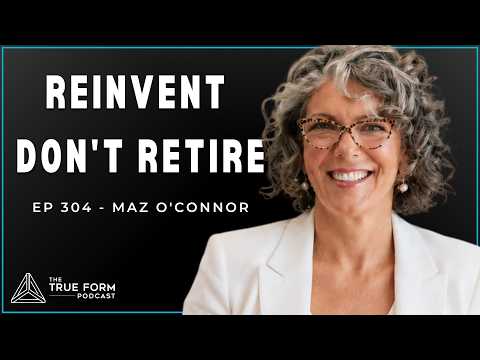
Maz O'Connor: Reinvent, Don't Retire. Why Your Best Years Are Still Ahead
It's never too late to start. At 55, Maz O'Connor had built the life she'd manifested 15 years earlier: a beautiful home in coastal Victoria, her own yoga and event space, a thriving community. By every external measure, she'd made it. Then a voice she couldn't ignore said: there