

Excellence Over Perfection: Rules for Real Behaviour Change
How Stanley Bronstein rebuilt his health with a simple daily standard, and a mindset shift that actually sticks.
How Stanley Bronstein rebuilt his health with a simple daily standard, and a mindset shift that actually sticks.
Watch The Full Episode Here
〰️
Watch The Full Episode Here 〰️
TL;DR
Why “excellence” beats perfection for long-term health habits
How to build discipline when motivation disappears
The simplest standard Stanley teaches: 20 minutes of walking, every day
A practical way to step off “autopilot” and become more intentional
Why protecting your goals (and your environment) matters more than willpower
🎧 Available on Spotify, Apple Podcasts, YouTube or wherever you listen to your podcasts.
Introduction
Most people don’t fail because they “don’t want it enough.” They fail because they try to change their life while keeping the same identity, the same environment, and the same decision-making patterns that created the problem in the first place.
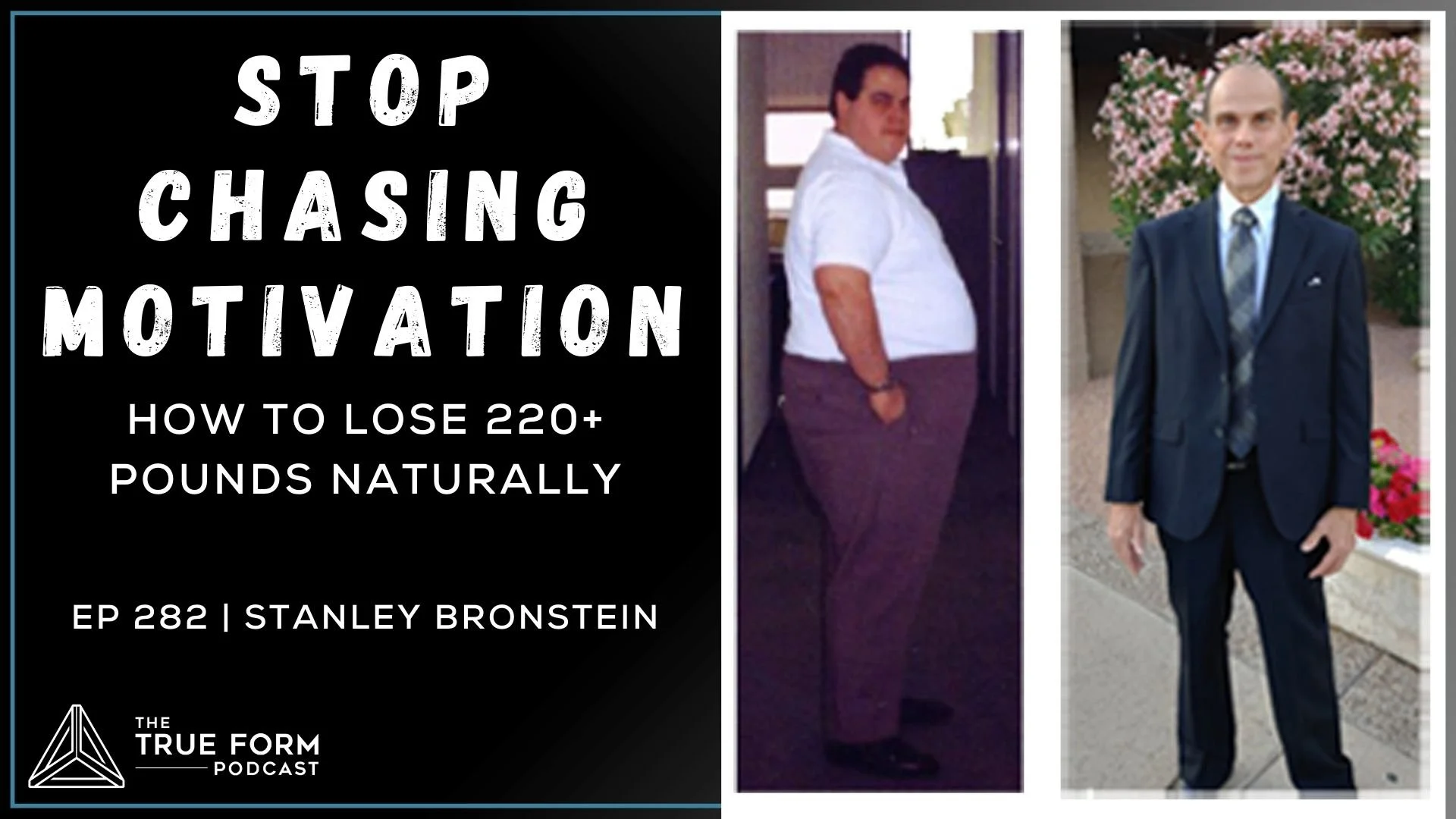
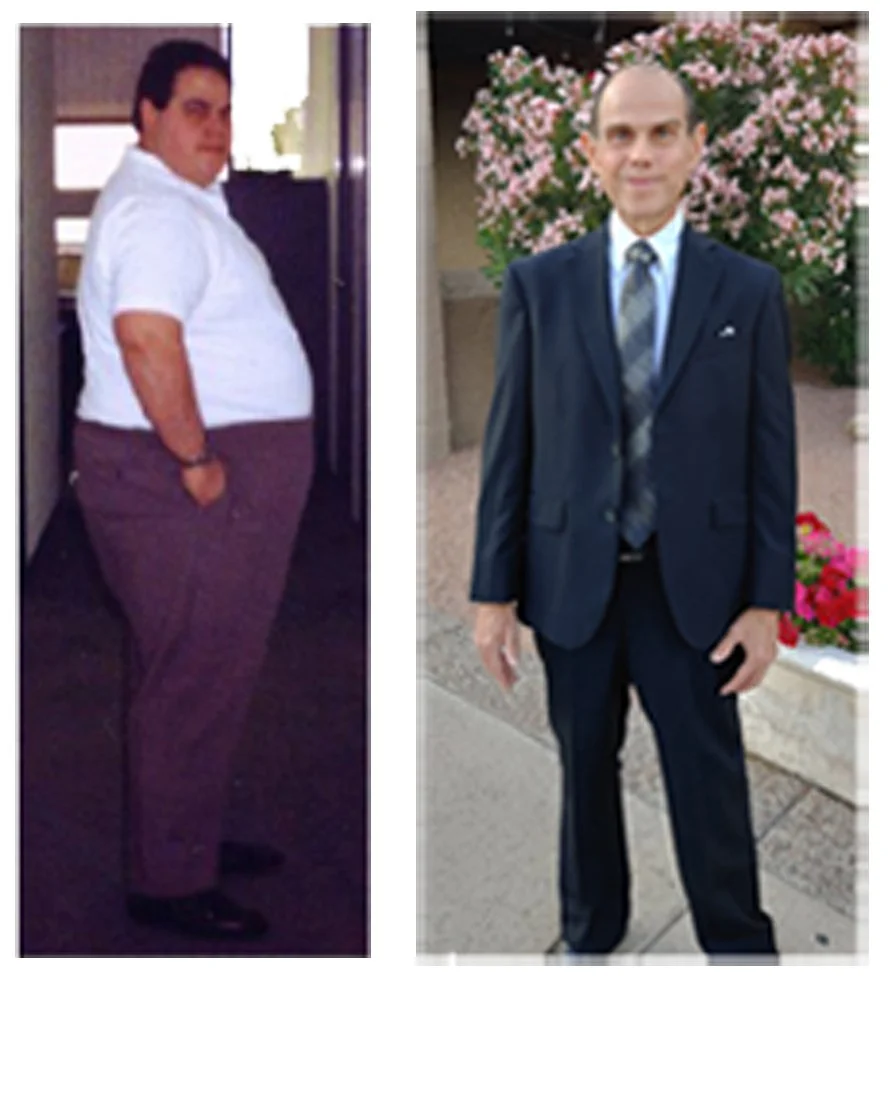
In this episode, I sat down with Stanley F. Bronstein, attorney, CPA, author, and creator of The Way of Excellence. Stanley also has a transformation story that stops you in your tracks: he went from 367 pounds to around 145, without drugs or surgery, and he’s walked more than 72,000 miles over the last 17 years.
What I liked about this conversation is that it’s not a hype-fest. It’s a practical look at what real behaviour change requires: honest self-assessment, a long-term mindset, personal responsibility, and simple daily actions that compound. We also spoke about the difference between perfection and excellence, why “commitment” removes decision fatigue, and one of my favourite lines from the episode: don’t share your goals with trolls.
If you want ideas you can actually use today, not “perfect plan” theory, this one delivers.
“The goal is not perfection. The goal is excellence.” - Stanley Bronstein
“The three most important words… are you willing?” - Stanley Bronstein
Listen on Apple
〰️
Listen on Apple 〰️
Listen on Spotify
〰️
Listen on Spotify 〰️
Lesson 1: Excellence Over Perfection for Sustainable Behaviour Change
What It Is: Excellence means “good enough, consistently.” Perfection means “never good enough, so you stop.”
Why It Matters: Perfectionism creates all-or-nothing thinking. Excellence creates momentum. When you aim for excellence, you can keep going even after a messy day, which is how real change happens.
How To Apply It:
Pick one health habit you’ve been trying to do “perfectly” (food, training, sleep).
Define what “excellent” looks like for this week (simple, realistic, repeatable).
Remove the pass/fail language. Replace it with “Did I show up?”
Track consistency, not intensity (days done beats days smashed).
When you slip, treat it like data: “What happened?” not “What’s wrong with me?”
Pro Tip: If your plan requires you to be perfect to succeed, it’s not a plan, it’s a trap.
Try This Today: Write one sentence: “Excellent for me this week is ______.”
Lesson 2: Build Discipline by Committing, Not Negotiating
What It Is: Discipline isn’t punishment. It’s eliminating the need to debate with yourself. Stanley’s point was simple: when you’re truly committed, you stop asking “Should I?” every day.
Why It Matters: Motivation is unreliable. Commitment reduces decision fatigue (that mental drain from constantly negotiating with yourself). When the rules are clear, follow-through gets easier.
How To Apply It:
Choose one non-negotiable for the next 14 days (keep it small).
Decide your rule in plain language (example: “I walk every day.”).
Make it measurable (time, distance, or minimum standard).
Remove “maybe” triggers: set your shoes out, block the time, plan the route.
If you miss a day, don’t spiral, restart immediately (no shame tax).
Pro Tip: If you keep “leaving room” for excuses, you’ll take it when life gets busy.
Try This Today: Decide one rule you’ll follow tomorrow, no matter what.
“When you become 100% committed… you stop asking questions about it.” - Stanley Bronstein
Lesson 3: Use a Simple Walking Standard (20 Minutes a Day)
What It Is: Stanley teaches a minimum walking standard most people can do: 20 minutes a day, every day.
Why It Matters: Walking lowers the barrier to entry. It’s accessible, low-impact, and it doubles as a thinking tool, a way to get out of your own head and back into your life.
How To Apply It:
Start with 20 minutes, not 60 (make it embarrassingly doable).
Link it to an existing habit: after breakfast, after work, after dinner.
If you’re time-poor, split it into two 10-minute walks.
Use the walk for reflection (see Lesson 4) instead of scrolling.
Track streaks lightly (aim for consistency, not perfection).
Pro Tip: Don’t wait until you “feel like it.” Walking is the cure for not feeling like it.
Try This Today: Put a 20-minute walk in your calendar for tomorrow.
“If you walk 20 minutes a day… you meet some very interesting people… the most interesting person… yourself.” - Stanley Bronstein
Lesson 4: Step Off Autopilot with Daily Awareness and Time Tracking
What It Is: “Autopilot” is when days happen to you. Awareness is when you choose how you spend your time and energy. Stanley’s practical suggestion: list how you spend your time and review it.
Why It Matters: Most people aren’t failing from lack of knowledge. They’re losing their days to default habits, screens, stress loops, reactive routines. Awareness gives you choice.
How To Apply It:
At the end of today, write down what you actually did (5 minutes).
Estimate time spent on each item (rough is fine).
Circle one “time leak” (doom scrolling, random snacking, late-night TV).
Replace it with one “quality activity” (walk, prep food, early bedtime).
Repeat for 7 days and look for patterns (not perfection).
Pro Tip: You can’t change what you refuse to measure (even loosely).
Try This Today: Make a quick list: “Today I spent time on ____.”
Lesson 5: Protect Your Environment (and Don’t Share Goals with Trolls)
What It Is: Your environment includes people, food in the house, and the conversations you allow. Stanley’s line was clear: share goals wisely, and don’t share them with people who undermine you.
Why It Matters: Behaviour change is hard enough without drag from the outside. The wrong environment turns every habit into a battle. The right environment makes the “good choice” the easy choice.
How To Apply It:
Identify one person or situation that consistently pulls you off track.
Decide your boundary: less time, less detail, less access.
Replace “I have to” with “I get to” (it changes the emotional tone fast).
Stock your environment for success (healthier snacks visible, junk less available).
If you live with others, aim for “supportive enough,” not perfect alignment.
Pro Tip: Protecting your goals early is not rude, it’s wise.
Try This Today: Choose one goal you’ll keep private until you’ve built momentum.
“Don’t share your goals with trolls.” - Stanley Bronstein
Mini Case/Example (optional)
Stanley shared a story about meeting Peggy Chun, an artist living with Lou Gehrig’s disease (ALS). She couldn’t walk, yet she had deep joy for life and even found ways to keep creating. The takeaway wasn’t guilt. It was perspective: if you can take the walk, it’s a privilege, not a burden.
“I don’t have to walk… I get to walk.” - Stanley Bronstein
Quick Wins Checklist (Do These Today)
Write your “excellent for this week” standard (one sentence).
Schedule a 20-minute walk for tomorrow.
Do a 5-minute time audit: what did you actually spend your day on?
Pick one non-negotiable for the next 14 days (keep it small).
Remove one friction point (shoes out, route planned, calendar blocked).
Decide one boundary: who doesn’t need access to your goals right now?
Closing Insight
Real change isn’t about finding the perfect plan. It’s about becoming the kind of person who follows through, even when life is loud, work is busy, and motivation is missing. Stanley’s story is extreme in results, but the method is surprisingly simple: tell the truth, play the long game, choose commitment over negotiation, and set a minimum daily standard you can repeat. If you can walk 20 minutes a day and pay attention to how you spend your time, you can start steering your life again. Excellence is available to you right now, not when things calm down, but because they haven’t.
🎧 Available on Spotify, Apple Podcasts, YouTube or wherever you listen to your podcasts.
Watch me on YouTube
Listen to the True From Podcast:
Apple Podcast -
https://podcasts.apple.com/au/podcast/the-true-form-podcast/id1593804496
Spotify -
https://open.spotify.com/show/6RVH2O6MbLOCohBKPhXO0L?si=ZI8D3MnhSfSjnohSXYN_MQ
Everywhere els -

Be Your Own Health Advocate: Rob Rene’s Health Awakening
Rob Rene shares how a Stage 3 melanoma diagnosis forced him to rethink diet, technology, and personal responsibility in health.
What one Stage 3 melanoma diagnosis taught Rob about diet, curiosity, and taking ownership of your health.
Watch The Full Episode Here
〰️
Watch The Full Episode Here 〰️

TL;DR
Why “be your own health advocate” is the most practical health mindset shift you can make.
How Rob approached cancer as a personalised problem, not a one-size-fits-all diagnosis.
What he learned about diet, sugar, and why “what works” depends on your body.
How to think clearly in a world full of conflicting health information.
Where tech (and AI) can help, and where it can distract or backfire.
🎧 Available on Spotify, Apple Podcasts, YouTube or wherever you listen to your podcasts.
Introduction
Most people don’t think deeply about health until they have to. A diagnosis, a scare, a close call, something that forces you to stop living on autopilot and start paying attention.
In this episode of The True Form Podcast, I sat down with Rob Rene, founder of Exodus Strong, who’s been navigating a Stage 3 melanoma battle. Early in our chat, he said something that set the tone for the whole conversation: he’s been learning how to “transition my body from a cancer-creating machine to a cancer-killing machine.” It’s a big statement, and it points to the deeper theme of the episode: taking responsibility for your own health, not outsourcing it.
Rob’s story moves through corporate life, a pandemic-driven wake-up call, and into intense self-education around nutrition, the immune system, and what he sees as the future of personalised healthcare. We also talk about technology, tracking, and the mind-body-spirit connection, including how faith and gratitude shape the way he approaches healing.
Below are the most practical lessons from our conversation, written for curious, health-minded people who want clear steps they can use today.
Listen on Spotify
〰️
Listen on Spotify 〰️
Listen on Apple
〰️
Listen on Apple 〰️
Lesson 1: Be your own health advocate (don’t outsource your health)
What It Is: Taking ownership of your health decisions by learning, asking questions, and staying involved, rather than handing everything over to someone else.
Why It Matters: When you take the driver’s seat, you stop treating health like a mystery that only “experts” can solve. You ask better questions, you notice patterns sooner, and you make choices that fit your body and your life.
How To Apply It:
Write down your top 1-2 health goals (energy, sleep, pain, weight, stress). Keep it simple.
Track your symptoms for a week (sleep quality, mood, digestion, pain, cravings).
When you get advice, ask: “What problem is this solving?” and “What’s the trade-off?”
Build a short list of trusted sources you can cross-check (not just one person).
Try one change at a time for 7-14 days so you can actually see what works.
Pro Tip: Don’t confuse “taking ownership” with “doing it alone.” Ownership means you’re engaged, not isolated.
Try This Today: Spend 3 minutes writing down one health issue you’ve been tolerating and one question you want answered about it.
“You need to be your own advocate.” - Rob Rene
Lesson 2: Treat health like a root-cause problem, not a symptom problem
What It Is: Looking for what’s driving the issue underneath the surface - instead of just trying to quiet the symptom.
Why It Matters: Symptoms can be useful signals. If you only silence the signal, you can miss what your body is trying to tell you. The goal is to reduce the cause, not just manage the noise.
How To Apply It:
Name the symptom clearly (e.g., headaches, fatigue, poor sleep, reflux).
Ask: “When did it start?” and “What changed around that time?”
Look at the basics first: sleep, stress, movement, nutrition, sunlight, and hydration.
Identify 1-2 likely contributors (late caffeine, alcohol, screen time, poor recovery, low protein, ultra-processed foods).
Make a single targeted change for a week, then reassess.
Pro Tip: A common mistake is chasing complicated solutions while ignoring basics like sleep and food quality.
Try This Today: Pick one symptom and write down three possible contributors you can control this week.
Lesson 3: Nutrition matters, but “the right diet” is personal
What It Is: Using food as a lever for health, while recognising that your body’s needs may differ from someone else’s.
Why It Matters: Rob’s biggest nutrition lesson was that what looks “healthy” on paper can still be wrong for a specific person, depending on what’s happening in their body.
In the episode, Rob describes learning that his melanoma had a BRAF mutation and that it changed how he thought about diet. He tried keto because it can be helpful for some people, but later realised (for his specific case) that saturated fat may have been an issue for him. His takeaway wasn’t “keto is bad”, it was “you need to understand your body.”
How To Apply It:
Start with the simplest lever: reduce added sugar for 14 days.
Keep a food-and-feel note (energy, sleep, cravings, digestion, mood).
Prioritise whole foods: lean proteins, vegetables, fruit, legumes, minimally processed carbs.
If you’re experimenting (keto, low carb, low fat), do it for a defined period and track outcomes.
If you have a medical condition, avoid blanket diet rules. Work with a qualified practitioner. (Note: specific clinical guidance was not provided in the episode.)
Pro Tip: Don’t change everything at once. You’ll never know what caused the improvement.
Try This Today: Scan your pantry and remove the one most obvious source of added sugar.
“I was feeding my cancer what it wanted.” - Rob Rene
Lesson 4: Learn to filter health information without becoming cynical
What It Is: Staying curious and critical at the same time, without believing everything, and without dismissing everything.
Why It Matters: The hardest part for most people isn’t motivation. It’s confusion. If you don’t have a method for evaluating claims, you’ll bounce between extremes or give up entirely.
Rob’s approach in the episode is to cross-check what he hears. He also warns that not all research is clean, and that you need to look at incentives and funding where possible. You don’t need to become paranoid; you just need a process.
How To Apply It:
When you hear a claim, separate it into: “What is being claimed?” and “What would prove it true?”
Ask whether it’s a petri dish result, an animal result, or a human outcome. (Note: Rob mentions this distinction using red light therapy as an example.)
Look for patterns across multiple sources, not one headline or one influencer.
Be cautious with absolute language: “always,” “never,” “cure,” “guaranteed.”
Focus on low-risk, high-upside habits first (sleep, movement, nutrition, stress management).
Pro Tip: A common mistake is outsourcing your thinking to the loudest voice, even if it sounds confident.
Try This Today: Take one health claim you’ve heard recently and write one question that would help you test it.
Lesson 5: Use health tech to learn your body, then don’t let it run your life
What It Is: Using wearables, tracking, and (eventually) AI to personalise health, while keeping boundaries so you don’t become obsessed or distracted.
Why It Matters: We talked about how technology can help people notice patterns faster and make more personalised decisions. Rob believes healthcare is moving toward individualised solutions based on biomarkers, bloodwork, and genetics.
We also explored the downside: too much tracking can disconnect you from your body. Rob mentions concerns about EMF exposure and describes choosing a lower-EMF ring for tracking rather than wearing multiple devices.
How To Apply It:
Track one meaningful metric (sleep, steps, HRV, resting heart rate) for 2-4 weeks.
Pair the metric with how you feel (energy, mood, focus). Data without context can mislead you.
Use the trend, not the daily number. One bad night doesn’t equal a broken body.
Build a “tech-off” window each day (especially before bed).
Keep devices out of the bedroom if sleep is a struggle. (Note: specific device recommendations were not provided in the episode.)
Pro Tip: A common mistake is letting the device tell you how you feel, instead of using it to learn how you feel.
Try This Today: Set a nightly “screens off” time 30 minutes earlier than usual.
Mini Case/Example (from the episode)
Rob and I discussed how technology can bring fragmented health information together. I shared a story about an 82-year-old client who had years of scans and specialist input. After organising that information and using AI to interpret patterns, she was prompted to change her sleeping position, and her headaches improved. (Note: the specific AI tool used wasn’t named in the episode.)
“No one cares about your own health and wellness as much as you.” - Jack
Quick Wins Checklist (Do These Today)
Remove one obvious source of added sugar from your day (drink, snack, dessert).
Get 10 minutes of sunlight and a short walk.
Write one question you want answered about your health and start researching it.
Choose one metric to track for the next 14 days (sleep, steps, resting heart rate).
Create a 30-minute wind-down window tonight with no screens.
Closing Insight
If there’s one message that kept coming up in this conversation, it’s that your health is too important to run on autopilot. Whether you’re dealing with a diagnosis or just trying to feel better day-to-day, the basics still matter: what you eat, how you sleep, how you manage stress, and whether you stay curious. Rob’s story also highlights something people forget: what works for one person might not work for you, so your job is to learn your body, test thoughtfully, and keep refining. Technology can help, but it’s not the answer by itself. The goal isn’t perfect tracking or perfect routines; it’s ownership, consistency, and progress.
🎧 Available on Spotify, Apple Podcasts, YouTube or wherever you listen to your podcasts.
Watch me on YouTube
Listen to the True From Podcast:
Apple Podcast -
https://podcasts.apple.com/au/podcast/the-true-form-podcast/id1593804496
Spotify -
https://open.spotify.com/show/6RVH2O6MbLOCohBKPhXO0L?si=ZI8D3MnhSfSjnohSXYN_MQ
Everywhere els -

How to Regulate Your Nervous System for Confidence, Love & Success
Learn how nervous system regulation, trauma healing and self-worth shape your relationships, confidence and success. Practical steps inside.
Why trauma, self-worth and internal safety shape your relationships and your results with Naila Ahmed
Watch The Full Episode Here
-
Watch The Full Episode Here -

TL;DR
Your nervous system is constantly scanning for safety, and it quietly shapes your choices, habits, and relationships.
Trauma isn’t “just in your head”; it can show up in your body through stress patterns, hypervigilance, and chronic tension.
Self-worth grows when you understand your story, feel what you’ve avoided, and rewrite the beliefs you inherited.
Relationships are a mirror: they reveal patterns, triggers, and boundaries you can’t see alone.
You can start today with simple actions: clean up your inputs, notice your inner dialogue, and audit who you’re around.
🎧 Available on Spotify, Apple Podcasts, YouTube or wherever you listen to your podcasts.
Introduction
There’s a moment in some conversations where you can feel the “real” topic reveal itself. Not the headline topic. The one underneath it.
That’s what happened when I sat down with Nyla (Naila Ahmed), a holistic counsellor and therapist who helps clients heal childhood trauma, regulate emotions, and rewire the nervous system for more internal peace, as a flow-on effect, better relationships and stronger results in life.
Nyla was recording with me while travelling and working online, and her message landed quickly: You don’t build a powerful external life by pushing harder. You build it by creating safety inside your body. Because when your nervous system feels unsafe, you can do “all the right things” training, nutrition, sleep, and still feel stuck. In your relationships. In your confidence. In your ability to receive success.
This episode is ultimately about returning to who you were before fear, stress, and old programming took the wheel, what we call finding your true form. It’s warm, honest, and practical, with plenty of straight-talking insights you can use today.
Pull quote:
“Nervous system regulation… is the key. The quality of your life is in direct correlation to the regulation of your nervous system.” - Naila Ahmed
Listen On Apple Podcast
-
Listen On Apple Podcast -
Listen On Spotiy
-
Listen On Spotiy -
Lesson 1: Nervous system regulation is the foundation of “feeling safe”
What It Is: Nervous system regulation is your ability to return to a calm state after stress, rather than living in fight-or-flight (survival mode) all day.
Why It Matters: When your body doesn’t feel safe, it will chase safety in other ways, such as approval, people-pleasing, overworking, scrolling, control, or staying in relationships that don’t fit. Regulation doesn’t fix everything overnight, but it changes what you’re able to choose.
How To Apply It:
Name your default state: Are you usually calm, rushed, numb, or on edge? Don’t judge it, just label it.
Track your triggers for one day: Notice what spikes you (messages, work, certain people, your phone).
Create a “downshift” ritual (2–5 minutes): slow breathing, a short walk, or a simple grounding practice (feet on floor, feel your body).
Reduce stimulation at the source: fewer notifications, fewer apps on your home screen, less background noise.
Choose one regulating habit to repeat daily (walk, strength training, sunlight, journaling… pick one, not ten).
Pro Tip: Don’t aim to “never feel stress”. Aim to recover faster.
Try This Today: Take 10 slow breaths and feel your feet on the ground before you open your phone.
“Certainty is safety.” - Naila Ahmed
Lesson 2: You’re shaped by internal and external programming
What It Is: Nyla describes two forces that shape who you become: internal programming (your home, parents, early environment) and external programming (culture, social media, entertainment, beauty standards).
Why It Matters: If you don’t see the programming, you assume your thoughts are “you”. But many of your automatic beliefs are inherited. Once you see them, you can choose what stays.
How To Apply It:
Write down three beliefs you carry about love, money, or your body (good or bad).
Ask: Where did I learn this? Home? School? Culture? Social media?
Identify one belief you’d like to replace (example: “Money is bad” - “Money amplifies who I already am”).
Clean up your inputs: unfollow accounts that trigger comparison or shame.
Add one better input: a creator, podcast, or friend who reflects the life you want to live.
Pro Tip: Don’t keep “inspiring” content that secretly makes you feel behind.
Try This Today: Unfollow 5 accounts that make you compare yourself.
“You open yourself up to 10,000 people every time you look at your phone.” - Jack
Lesson 3: Trauma patterns show up in your body (not just your thoughts)
What It Is: Trauma is not only a memory, it’s a physiological imprint. A scary or unsafe experience can teach your body to stay on alert long after the event has passed.
Why It Matters: This is why people can be doing the basics “right” and still struggle: chronic stress patterns can show up as tension, hypervigilance, burnout, or feeling emotionally on edge. Nyla also links this to how stress can influence behaviours around food, training, and self-care.
How To Apply It:
Notice your stress signature: tight chest, clenched jaw, shallow breathing, stomach knots, restless legs.
Link the body signal to the moment: What was happening right before you felt it?
Ask: Is this current… or familiar? (Does it feel like an old pattern returning?)
Move the energy: walk, lift weights, stretch gently, don’t just think your way out of it.
Talk it out with safe support: therapy, counselling, or a trusted person. (Note: specific modalities weren’t detailed in the episode.)
Pro Tip: Don’t rely on “the gym is my therapy.” Training helps, but it doesn’t replace emotional processing.
Try This Today: Do a 60-second body scan: jaw, shoulders, belly, hands, where are you holding tension?
“Emotions are physical.” - Naila Ahmed
Lesson 4: Relationships reveal your patterns and require honest boundaries
What It Is: Relationships act like a mirror. They bring out your attachment style, your people-pleasing, your fear of abandonment, and your unmet needs.
Why It Matters: If you’ve ever thought, “Why do I keep ending up in the same dynamic?”, this is why. The relationship isn’t just about the other person, it’s also showing you what needs healing.
How To Apply It:
Start with self-honesty: What pattern keeps repeating for you (avoidance, anxiety, rescuing, overgiving)?
Check willingness: Nyla’s key filter is whether both people are willing to grow.
Define your non-negotiables: respect, emotional safety, honesty, effort… choose 3.
Have one direct conversation: what you need, what you’re available for, what needs to change.
Give it a timeframe: growth needs time, but avoid endless waiting with no action.
If boundaries keep getting crossed, consider distance or ending the relationship. (Note: the episode emphasises nuance; there’s no one-size-fits-all rule.)
Pro Tip: Don’t confuse intensity with connection.
Try This Today: Write one boundary you’ve been avoiding and why.
Lesson 5: Self-worth is built by returning to your core self
What It Is: Self-worth is knowing you are valuable without needing to earn it. Nyla frames it as “peeling back the layers”, undoing the beliefs formed by how you were treated and how you saw adults treat themselves.
Why It Matters: Low self-worth makes you tolerate poor treatment, chase validation, and doubt your ability to create the life you want. Higher self-worth changes what you accept and what you pursue.
How To Apply It:
Identify the loudest old message you still carry (example: “I’m not enough”).
Ask: Whose voice is that originally? (Parent, caregiver, culture, past relationship.)
Write a replacement message you’d teach a child (example: “My emotions are valid. I can learn and grow.”)
Practise kinder self-talk when you’re triggered, not fake positivity, just fair language.
Act like someone with self-worth in one small way: say no, rest, ask for help, speak directly.
Pro Tip: Self-worth grows through action, not affirmations alone.
Try This Today: When you catch “not bad” language, replace it with a clear positive statement (“I’m good”, “I’m steady”, “I’m grateful”).
“We don’t just absorb the way they treated us, we absorb the way they treated other people and how they treated themselves.” - Naila Ahmed
Lesson 6: Money and success often reflect internal safety
What It Is: Nyla links money and career success to self-worth and internal safety, not because money is “spiritual”, but because your beliefs drive your choices, confidence, and ability to receive.
Why It Matters: If you were raised around negative stories about money or “rich people”, you may unconsciously push success away, sabotage opportunities, or feel guilty about wanting more. Shifting the belief isn’t about greed; it’s about becoming someone who can hold responsibility and freedom without fear.
How To Apply It:
Write your current belief: Money is… (good/bad/stressful/unsafe).
Ask: Who taught me that? (family stories, culture, past experiences).
Replace the belief with something neutral and useful: “Money is a tool.”
Focus on the feeling under the goal: freedom, security, choice, generosity.
Build safety through basics: sleep, movement, supportive relationships, and a calmer inner dialogue.
Pro Tip: Don’t chase money to feel worthy, build worth and safety, then make clearer moves.
Try This Today: List one money belief you inherited that you no longer want to carry.
Mini Case/Example (from the episode)
One of the most practical moments is when Nyla gives three simple starting points, not a full overhaul, just accessible steps:
“Go onto your social media and unfollow all the people that make you compare yourself to them.” - Naila Ahmed
“Just start to become aware of your inner dialogue.” - Naila Ahmed
These are small actions with a big outcome: fewer triggers, clearer thinking, and a better chance of catching old patterns before they run the day.
Quick Wins Checklist (Do These Today)
Unfollow 5 accounts that trigger comparison or shame.
Turn off non-essential notifications for 24 hours.
Do a 60-second body scan and notice where you hold stress.
Write one repeating relationship pattern you want to break.
Replace one inherited belief about money with a neutral, useful one.
Take a 10-minute walk without headphones and let your nervous system downshift.
Closing Thoughts
If there’s one thread running through this whole episode, it’s that your life is not just built by your intentions, it’s built by your nervous system. When you feel unsafe inside, you’ll chase safety outside: in validation, in certainty, in control, or in people who can’t actually give it to you. The good news is you can change that pattern, but it starts with awareness and small, consistent actions. Clean up what you consume, listen to how you speak to yourself, and be honest about the relationships around you. You don’t need to become someone new; you need to come back to who you were before the world taught you to abandon yourself.
🎧 Available on Spotify, Apple Podcasts, YouTube or wherever you listen to your podcasts.
Watch me on YouTube
Listen to the True From Podcast
Apple Podcast -
https://podcasts.apple.com/au/podcast/the-true-form-podcast/id1593804496
Spotify -
https://open.spotify.com/show/6RVH2O6MbLOCohBKPhXO0L?si=ZI8D3MnhSfSjnohSXYN_MQ
Everywhere els -