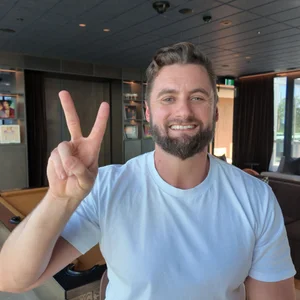
Be Your Own Health Advocate: Rob Rene’s Health Awakening
What one Stage 3 melanoma diagnosis taught Rob about diet, curiosity, and taking ownership of your health.
Watch The Full Episode Here
〰️
Watch The Full Episode Here 〰️
TL;DR
Why “be your own health advocate” is the most practical health mindset shift you can make.
How Rob approached cancer as a personalised problem, not a one-size-fits-all diagnosis.
What he learned about diet, sugar, and why “what works” depends on your body.
How to think clearly in a world full of conflicting health information.
Where tech (and AI) can help, and where it can distract or backfire.
🎧 Available on Spotify, Apple Podcasts, YouTube or wherever you listen to your podcasts.
Introduction
Most people don’t think deeply about health until they have to. A diagnosis, a scare, a close call, something that forces you to stop living on autopilot and start paying attention.
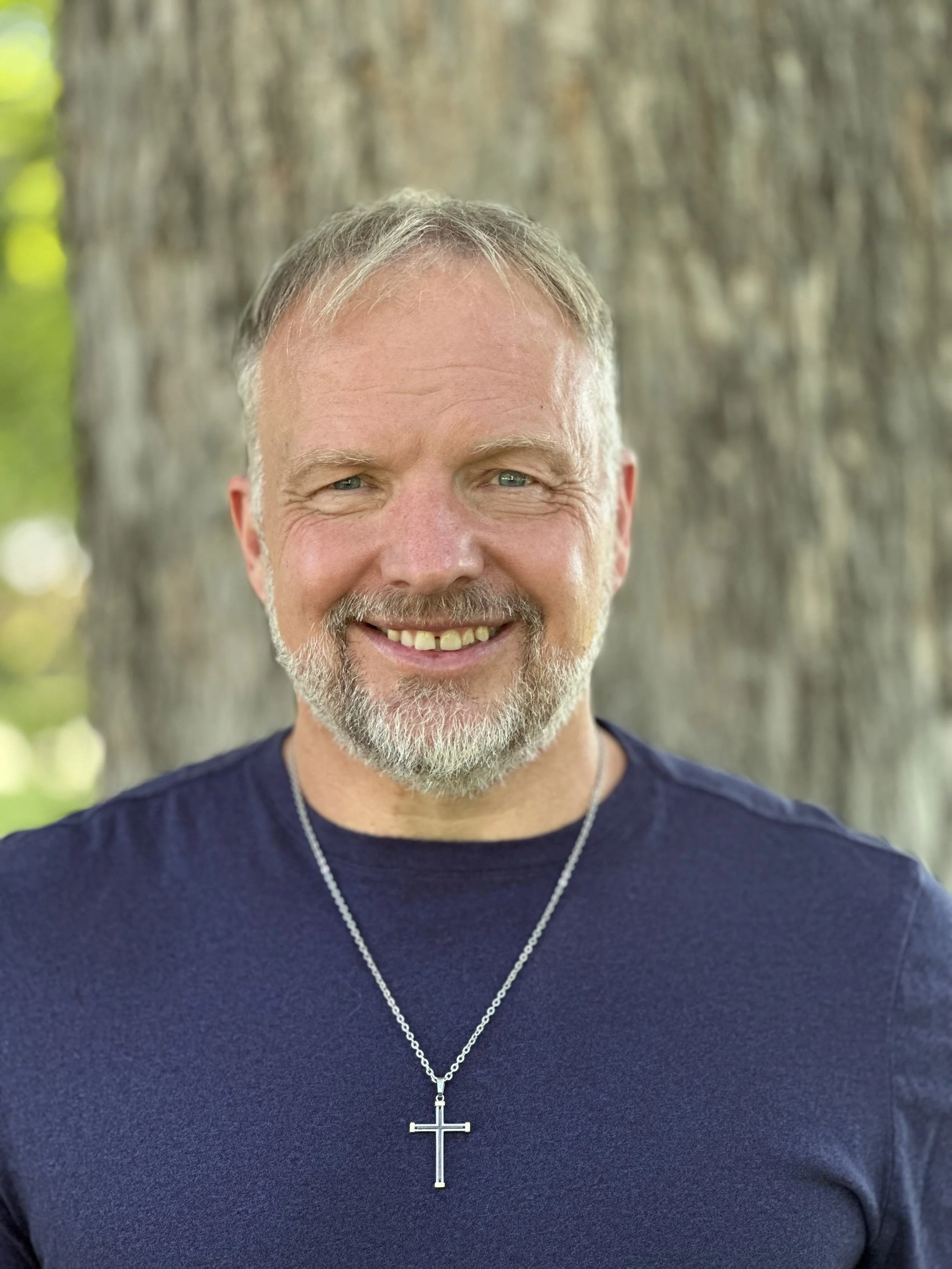
In this episode of The True Form Podcast, I sat down with Rob Rene, founder of Exodus Strong, who’s been navigating a Stage 3 melanoma battle. Early in our chat, he said something that set the tone for the whole conversation: he’s been learning how to “transition my body from a cancer-creating machine to a cancer-killing machine.” It’s a big statement, and it points to the deeper theme of the episode: taking responsibility for your own health, not outsourcing it.
Rob’s story moves through corporate life, a pandemic-driven wake-up call, and into intense self-education around nutrition, the immune system, and what he sees as the future of personalised healthcare. We also talk about technology, tracking, and the mind-body-spirit connection, including how faith and gratitude shape the way he approaches healing.
Below are the most practical lessons from our conversation, written for curious, health-minded people who want clear steps they can use today.
Listen on Spotify
〰️
Listen on Spotify 〰️
Listen on Apple
〰️
Listen on Apple 〰️
Lesson 1: Be your own health advocate (don’t outsource your health)
What It Is: Taking ownership of your health decisions by learning, asking questions, and staying involved, rather than handing everything over to someone else.
Why It Matters: When you take the driver’s seat, you stop treating health like a mystery that only “experts” can solve. You ask better questions, you notice patterns sooner, and you make choices that fit your body and your life.
How To Apply It:
Write down your top 1-2 health goals (energy, sleep, pain, weight, stress). Keep it simple.
Track your symptoms for a week (sleep quality, mood, digestion, pain, cravings).
When you get advice, ask: “What problem is this solving?” and “What’s the trade-off?”
Build a short list of trusted sources you can cross-check (not just one person).
Try one change at a time for 7-14 days so you can actually see what works.
Pro Tip: Don’t confuse “taking ownership” with “doing it alone.” Ownership means you’re engaged, not isolated.
Try This Today: Spend 3 minutes writing down one health issue you’ve been tolerating and one question you want answered about it.
“You need to be your own advocate.” - Rob Rene
Lesson 2: Treat health like a root-cause problem, not a symptom problem
What It Is: Looking for what’s driving the issue underneath the surface - instead of just trying to quiet the symptom.
Why It Matters: Symptoms can be useful signals. If you only silence the signal, you can miss what your body is trying to tell you. The goal is to reduce the cause, not just manage the noise.
How To Apply It:
Name the symptom clearly (e.g., headaches, fatigue, poor sleep, reflux).
Ask: “When did it start?” and “What changed around that time?”
Look at the basics first: sleep, stress, movement, nutrition, sunlight, and hydration.
Identify 1-2 likely contributors (late caffeine, alcohol, screen time, poor recovery, low protein, ultra-processed foods).
Make a single targeted change for a week, then reassess.
Pro Tip: A common mistake is chasing complicated solutions while ignoring basics like sleep and food quality.
Try This Today: Pick one symptom and write down three possible contributors you can control this week.
Lesson 3: Nutrition matters, but “the right diet” is personal
What It Is: Using food as a lever for health, while recognising that your body’s needs may differ from someone else’s.
Why It Matters: Rob’s biggest nutrition lesson was that what looks “healthy” on paper can still be wrong for a specific person, depending on what’s happening in their body.
In the episode, Rob describes learning that his melanoma had a BRAF mutation and that it changed how he thought about diet. He tried keto because it can be helpful for some people, but later realised (for his specific case) that saturated fat may have been an issue for him. His takeaway wasn’t “keto is bad”, it was “you need to understand your body.”
How To Apply It:
Start with the simplest lever: reduce added sugar for 14 days.
Keep a food-and-feel note (energy, sleep, cravings, digestion, mood).
Prioritise whole foods: lean proteins, vegetables, fruit, legumes, minimally processed carbs.
If you’re experimenting (keto, low carb, low fat), do it for a defined period and track outcomes.
If you have a medical condition, avoid blanket diet rules. Work with a qualified practitioner. (Note: specific clinical guidance was not provided in the episode.)
Pro Tip: Don’t change everything at once. You’ll never know what caused the improvement.
Try This Today: Scan your pantry and remove the one most obvious source of added sugar.
“I was feeding my cancer what it wanted.” - Rob Rene
Lesson 4: Learn to filter health information without becoming cynical
What It Is: Staying curious and critical at the same time, without believing everything, and without dismissing everything.
Why It Matters: The hardest part for most people isn’t motivation. It’s confusion. If you don’t have a method for evaluating claims, you’ll bounce between extremes or give up entirely.
Rob’s approach in the episode is to cross-check what he hears. He also warns that not all research is clean, and that you need to look at incentives and funding where possible. You don’t need to become paranoid; you just need a process.
How To Apply It:
When you hear a claim, separate it into: “What is being claimed?” and “What would prove it true?”
Ask whether it’s a petri dish result, an animal result, or a human outcome. (Note: Rob mentions this distinction using red light therapy as an example.)
Look for patterns across multiple sources, not one headline or one influencer.
Be cautious with absolute language: “always,” “never,” “cure,” “guaranteed.”
Focus on low-risk, high-upside habits first (sleep, movement, nutrition, stress management).
Pro Tip: A common mistake is outsourcing your thinking to the loudest voice, even if it sounds confident.
Try This Today: Take one health claim you’ve heard recently and write one question that would help you test it.
Lesson 5: Use health tech to learn your body, then don’t let it run your life
What It Is: Using wearables, tracking, and (eventually) AI to personalise health, while keeping boundaries so you don’t become obsessed or distracted.
Why It Matters: We talked about how technology can help people notice patterns faster and make more personalised decisions. Rob believes healthcare is moving toward individualised solutions based on biomarkers, bloodwork, and genetics.
We also explored the downside: too much tracking can disconnect you from your body. Rob mentions concerns about EMF exposure and describes choosing a lower-EMF ring for tracking rather than wearing multiple devices.
How To Apply It:
Track one meaningful metric (sleep, steps, HRV, resting heart rate) for 2-4 weeks.
Pair the metric with how you feel (energy, mood, focus). Data without context can mislead you.
Use the trend, not the daily number. One bad night doesn’t equal a broken body.
Build a “tech-off” window each day (especially before bed).
Keep devices out of the bedroom if sleep is a struggle. (Note: specific device recommendations were not provided in the episode.)
Pro Tip: A common mistake is letting the device tell you how you feel, instead of using it to learn how you feel.
Try This Today: Set a nightly “screens off” time 30 minutes earlier than usual.
Mini Case/Example (from the episode)
Rob and I discussed how technology can bring fragmented health information together. I shared a story about an 82-year-old client who had years of scans and specialist input. After organising that information and using AI to interpret patterns, she was prompted to change her sleeping position, and her headaches improved. (Note: the specific AI tool used wasn’t named in the episode.)
“No one cares about your own health and wellness as much as you.” - Jack
Quick Wins Checklist (Do These Today)
Remove one obvious source of added sugar from your day (drink, snack, dessert).
Get 10 minutes of sunlight and a short walk.
Write one question you want answered about your health and start researching it.
Choose one metric to track for the next 14 days (sleep, steps, resting heart rate).
Create a 30-minute wind-down window tonight with no screens.
Closing Insight
If there’s one message that kept coming up in this conversation, it’s that your health is too important to run on autopilot. Whether you’re dealing with a diagnosis or just trying to feel better day-to-day, the basics still matter: what you eat, how you sleep, how you manage stress, and whether you stay curious. Rob’s story also highlights something people forget: what works for one person might not work for you, so your job is to learn your body, test thoughtfully, and keep refining. Technology can help, but it’s not the answer by itself. The goal isn’t perfect tracking or perfect routines; it’s ownership, consistency, and progress.
🎧 Available on Spotify, Apple Podcasts, YouTube or wherever you listen to your podcasts.
Watch me on YouTube
Listen to the True From Podcast:
Apple Podcast -
https://podcasts.apple.com/au/podcast/the-true-form-podcast/id1593804496
Spotify -
https://open.spotify.com/show/6RVH2O6MbLOCohBKPhXO0L?si=ZI8D3MnhSfSjnohSXYN_MQ
Everywhere els -