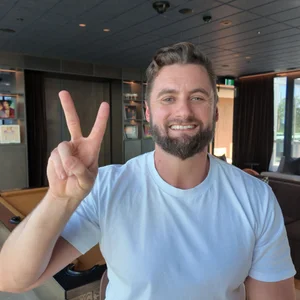
Reinvent, Don't Retire: What a 55-Year-Old Taught Me About Living Well
A practical guide to purpose, permission, and building a health span that actually lasts.
Watch On YouTube
〰️
Watch On YouTube 〰️
TL;DR
Why the "retire at 67 and life is amazing" story is an illusion, and what to do instead.
How your health works exactly like a compound investment (and why most people give up on it).
The difference between purpose and ego, and a simple test to tell them apart.
Why putting yourself first is the least selfish thing a parent can do.
The one reframe that makes taking risks in midlife easier: "when I had more, I risked less."
A concrete Quick Wins checklist you can start on today.
🎧 Available on Spotify, Apple Podcasts, YouTube or wherever you listen to your podcasts.
Introduction
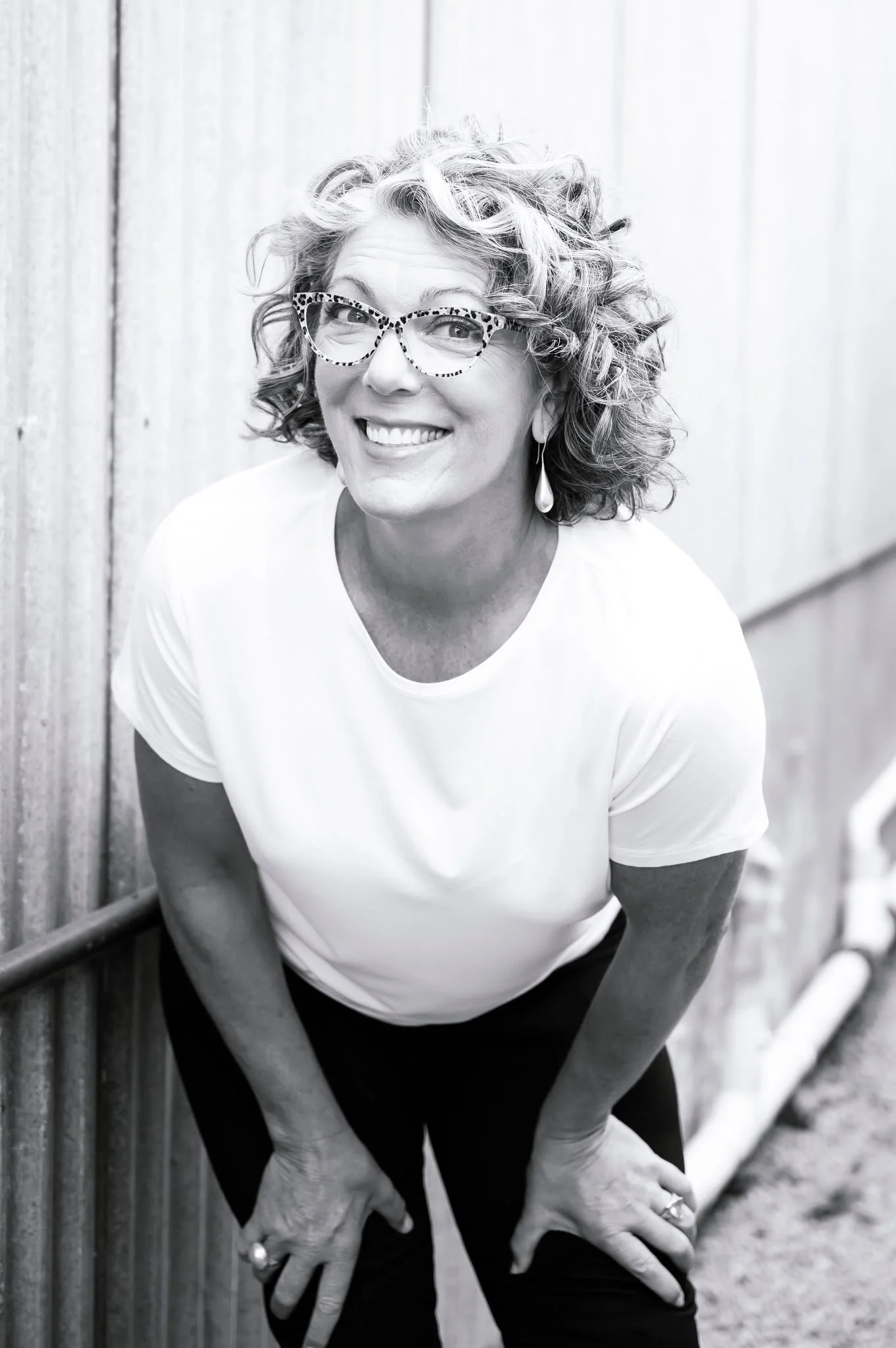
At 55, Maz O'Connor had the life she'd put on her vision board 15 years earlier. A beautiful property in Somers on Victoria's Mornington Peninsula. Her own yoga and event space. Dolphins and koalas out the back. A partner. A community. By every external measure, she'd arrived.
Then she sold everything but the house, car included, and moved to Bali, not knowing where she was going to live.
Maz is a former nutritionist, radio host, and the founder of The Longevity Project, a platform helping women 55+ navigate what she calls the "third act" of life with health, purpose, and freedom. She's a single mum who raised two boys, worked at one of Australia's leading health retreats decades ago, and has spent her career being what she describes as "a lighthouse" for other women who suspect their best chapter is still ahead.
This is one of the most practical, generous conversations I've had on the podcast. Whether you're 25 or 65, Maz's blueprint for reinvention, longevity, and living deliberately applies. Here are the five biggest lessons I pulled from our chat, and exactly how to use them.
Listen On Apple Podcast
〰️
Listen On Apple Podcast 〰️
Listen On Spotify
〰️
Listen On Spotify 〰️
Lesson 1: Treat Your Health Like a Compound Investment
What It Is: The same maths that grows a super balance over 30 years grows your health over 30 years; small daily inputs, invisible for a long time, then compounding into something powerful.
Why It Matters: Most people quit on their health long before it pays off, because unlike an investment portfolio, you can't see the line going up on a graph. Understanding that the curve is invisible… but real, is what keeps you consistent when nothing seems to be changing.
How To Apply It:
Pick one input you can repeat daily (sleep, water, steps, protein at breakfast, just one).
Set the bar at 1% better than yesterday, not 100% perfect.
Track it the same way you'd track a bank balance a simple log or app, checked weekly.
Add a second habit only when the first has been consistent for four weeks.
Re-measure your baseline every three months, not every day. Health compounds slowly.
Pro Tip: If you can't see progress, you'll assume there is none. Choose one objective measurement (sleep hours, resting heart rate, a lift number) so the invisible becomes visible.
Try This Today: Write down one health input you'll do daily for the next 30 days. Just one.
Lesson 2: The 67 Illusion: Why Retirement Isn't the Finish Line
What It Is: The cultural story that says "grind now, retire at 67, and life gets amazing" is a myth. With longer lifespans, a third of your life will now happen after retirement, and neither the government nor your super is built for that timeframe.
Why It Matters: If a third of your life is retirement, you can't afford to arrive at it broken, bored, or without purpose. The people who thrive after 55 didn't wait for permission or a date on a calendar, they started building the life they wanted decades earlier.
How To Apply It:
Stop treating 67 as a magic number. Choose a "life I want to be living" date instead.
Audit what you'd need: physically, financially, mentally, to actually live that life.
Identify the one skill or asset that takes the longest to build, and start it now.
Talk to someone who is 10–20 years older and already living that life. Ask them what they wish they'd started earlier.
Reframe retirement as "reinvention" a chapter change, not an ending.
Pro Tip: Never confuse longevity with health span. Living longer is not the goal. Living well, longer, is.
Try This Today: Send one message to someone living the kind of third act you want. Ask them one question.
Lesson 3: Purpose vs Ego: The Test That Cuts Through the Noise
What It Is: Purpose is what you'd still do if no one was watching, paying, or clapping. Ego is what you do for the applause. Both look identical from the outside.
Why It Matters: Chasing external validation; the car, the followers, the round number in the bank, creates a treadmill that never satisfies. Purpose, by contrast, is the only source of meaning that doesn't require constant refuelling from strangers.
How To Apply It:
Write down the activity or goal you're currently chasing.
Ask: "Would I still do this if no one ever knew?" Answer honestly.
If the answer is no, don't quit it, just be honest about why you're doing it.
Look for one activity where the answer is a genuine yes. Do more of that.
Notice when validation shows up as a nice bonus vs when it's the whole point.
Maz found her shift through Vedic meditation, taught to her by Tim Mitchell, a practice she describes as "a really beautiful, gentle, soft mirror of I see you, and it's okay, and there's another way." You don't need to meditate to run the test. You just need to be willing to answer the question honestly.
Pro Tip: Purpose usually feels quieter than ego. If a goal is loud, ask what's making the noise.
Try This Today: Pick your busiest task tomorrow and ask the "would I still do it if no one knew?" question before you start.
Lesson 4: Give Yourself Permission: The Third Act Is Yours to Design
What It Is: The "third act" (a phrase Maz borrowed from Jane Fonda) is the stage of life after the child-raising years, once the identity of "mum" or "dad" or "career-builder" softens and a new identity is waiting to be chosen. And no one is coming to hand you permission to design it. You have to give it to yourself.
Why It Matters: Many people, especially women spend decades being the lighthouse for everyone else. When the children move out, the career winds down, or the relationship changes, they're left with a question they've never had time to ask: who do I want to be? The people who thrive in this chapter are the ones who stop waiting for someone else to greenlight it.
How To Apply It:
Do a vision board: writing, images, whatever works, and put the yoga studio (or its equivalent) on it.
When the voice says "who are you to live like this?", write that voice down too. Naming it takes its power away.
Identify three people already living the life you want, even virtually. Follow them, DM them, learn how they got there.
Do one visible thing this month that gives yourself permission; book the course, join the community, take the first step.
Expect the pushback. Someone in your life will "laugh" at you. Maz's response is worth stealing: "Mate, you've seen nothing yet."
Pro Tip: The people laughing are usually seeing themselves through their own lens, not you through yours. That's their limit, not yours.
Try This Today: Write down one dream you shut down in your own head this year. Just write it. That's permission.
Lesson 5: Put Yourself First (It's the Least Selfish Thing You Can Do)
What It Is: Prioritising your own sleep, movement, and mental health isn't at the expense of the people who rely on you. It's the mechanism that makes you capable of showing up for them.
Why It Matters: Maz was a single mum of two young boys practising Bikram yoga three to four times a week — a serious time and money investment. Her youngest would cry when she left. One Saturday she came home to a drawing the boys had made that read: "Mummy's happy because Mum does yoga." The point isn't yoga. The point is that children (and partners, and colleagues) don't need you to be a martyr. They need you to be well.
How To Apply It:
Pick one non-negotiable. Mark Boris's is bedtime. Maz's was Bikram. Yours might be a morning walk.
Set an alarm for it. Maz has a 9:30pm alarm that says "I'm excited, I'm going to bed."
Communicate it to the people around you — not as a rule, but as an act of self-honouring.
Habit-stack it. Attach the new habit to something you already do (glass of water after every bathroom visit).
Notice the second-order effect: the energy, patience, and presence you have for other people because you did the thing.
Here's the line worth pinning to your fridge:
"I do this because it makes me a better mama. And when I'm a better mama, we get to have more adventures." - Maz O'Connor
Pro Tip: The word "selfish" often gets thrown at the habits that make you a better partner, parent, or friend. Notice who's throwing it, and why.
Try This Today: Set one alarm on your phone for a non-negotiable self-care action. Name it something you'd actually respond to.
Lesson 6: When You Have More, You Risk Less: The Case for Owning Less
What It Is: The more possessions, obligations, and financial commitments you accumulate, the more risk-averse you become, because there's more to protect. Reducing what you carry can, counterintuitively, unlock more freedom and more opportunity.
Why It Matters: Most of us assume that stuff, savings, and status create safety. Maz's experience, selling her house years earlier to rent, then selling her car and most possessions to move to Bali, points to the opposite. Reducing outgoings created room to take the risks that actually built the next chapter.
How To Apply It:
List the three biggest fixed costs in your life. Ask which ones exist because you truly need them, and which because you inherited an expectation.
Identify one material thing you're holding onto out of "I might need it one day" logic. Test living without it for a month.
Track what your monthly cost of living would be if you halved one category (housing, transport, subscriptions).
Reinvest the freed-up money, or the freed-up mental space, into something that grows you (education, travel, a business idea).
Notice how your appetite for risk changes as your obligations shrink.
Pro Tip: "I need a car" is worth interrogating. So is "I need this house," "I need this job," and "I need to live in this suburb." Not all of them will hold up.
Try This Today: Open your bank statement. Circle one recurring cost you haven't questioned in 12 months.
Pull Quotes Worth Sitting With
"It's never too late to start." - Maz O'Connor
"I sold everything but the house, car included, and I moved to Bali, not knowing where I was going to live." - Maz O'Connor
"When I had more, I risked less." - Maz O'Connor
"Who we are when no one's watching is our character." - Maz O'Connor
Quick Wins Checklist (Do These Today)
Write down one health habit you'll do daily for the next 30 days.
Send one message to someone already living the life you want. Ask them one question.
Set a non-negotiable bedtime alarm on your phone tonight.
Write down one dream you shut down in your own head this year, no action required, just name it.
Open your bank statement and circle one recurring cost you haven't questioned in 12 months.
Ask the "would I still do this if no one knew?" test on your busiest task tomorrow.
Closing Insight
The most useful thing about Maz's story isn't that she moved to Bali. It's that she waited 15 years, manifested the exact life she'd dreamt of, arrived there, and then had the courage to say there's more. Reinvention isn't reserved for people who are unhappy. It's available to anyone willing to keep asking better questions. Your health, your purpose, your relationships, and your risk appetite all compound in the same direction, quietly, invisibly, and then all at once. The people who thrive in their third act didn't get lucky. They started earlier, stayed consistent, and gave themselves permission before anyone else did. You can start today. You don't need permission. You already have it.
🎧 Available on Spotify, Apple Podcasts, YouTube or wherever you listen to your podcasts.
Watch me on YouTube
Listen to the True From Podcast
Apple Podcasts - https://podcasts.apple.com/au/podcast/the-true-form-podcast/id1593804496
Spotify - https://open.spotify.com/show/6RVH2O6MbLOCohBKPhXO0L?si=ZI8D3MnhSfSjnohSXYN_MQ
Everywhere els - https://trueform.buzzsprout.com
Sponsor: If you’re interested in trying red and near-infrared light therapy for recovery, pain, and overall health, check out Lumaflex. Use code TRUEFORM for 10% off: https://lumaflex.com.au/TRUEFORM