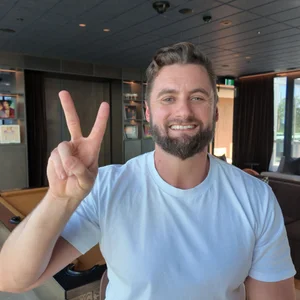
Earn the Right: Kyle Gonzalez on Health That Actually Lasts
Why the free habits you're skipping matter more than any supplement, and how to build a routine that actually sticks.
Watch On YouTube
〰️
Watch On YouTube 〰️
TL;DR
Why up to 90–95% of your health results might be sitting in habits that cost nothing.
The real reason "perfect routines" fail, and what actually works instead.
How finding your "why" keeps you going when motivation runs out
Why enjoying your movement matters more than doing the "optimal" workout.
The one free, no-equipment habit Kyle Gonzalez says moves the needle more than almost anything else.
🎧 Available on Spotify, Apple Podcasts, YouTube or wherever you listen to your podcasts.
Introduction
At a networking event a few weeks back, I found myself surrounded by five or six blokes firing off questions one after another. What supplement should I take? Is this exercise worth it? Should I be worried about that? It's the same question dressed up a hundred different ways, and it usually points to the same problem: we've been sold the idea that health is complicated.
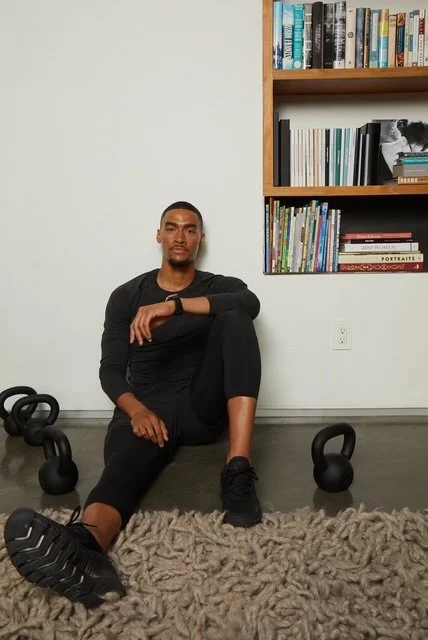
Kyle Gonzalez doesn't think so. Kyle Gonzalez (MS, CSCS Certified Strength and Conditioning Specialist) has spent more than a decade coaching, teaching and building health programs, and he now serves as Vice President of Performance and Coaching at Coya, a human performance company. He's a former Division 1 athlete, the author of Move, Thrive, and Come Alive, and host of The Vitality System Podcast.
In this episode, Kyle makes the case that most of us are overcomplicating our health while ignoring the free stuff that actually works. We get into why you have to "earn the right to supplement," why the perfect routine is a myth, how he rebuilt his career by choosing to be the only instead of the best, and the one simple daily habit he believes moves the needle more than almost anything else. If you've ever felt like you're doing "everything right" and still not seeing results, this one's for you.
Listen On Apple Podcast
〰️
Listen On Apple Podcast 〰️
Listen On Spotify
〰️
Listen On Spotify 〰️
Lesson 1: Earn the Right to Supplement, Start With What's Free
What It Is: Before you spend money on supplements or fancy interventions, master the free basics first: sunlight, movement, sleep, whole food, and good company.
Why It Matters: We're marketed at constantly, told we need a product or service to be healthy. Kyle argues the opposite is true: the biggest health wins are free, and skipping them means you're leaving most of the benefit on the table before you've even started.
How To Apply It:
List every free health input available to you right now: sleep, sunlight, walking, real food, social connection.
Rate yourself honestly out of ten on each one, before you buy anything new.
Pick the lowest-scoring area and commit to improving just that one for two to four weeks.
Hold off on any new supplement purchase until you've genuinely nailed the basics for at least a month.
Pro Tip: A common mistake is jumping straight to an expensive supplement stack while skipping sleep and whole foods — you're paying for a small slice of benefit while ignoring the biggest one.
Try This Today: Write down five free habits: sunlight, community, movement, whole food, sleep, and circle the one you're doing worst.
"I always say you have to earn the right to supplement." - Kyle Gonzalez
Lesson 2: Consistency Beats Perfection, The 30–90 Day Rule
What It Is: Sustainable results come from imperfect but consistent action over 30 to 90-plus days, not from a flawless routine.
Why It Matters: We've been sold instant gratification and quick-fix culture. Kyle sees this constantly with clients who try something for a week, don't feel a dramatic difference, and quit. Real change compounds slowly, and giving up early means you never get to see the benefit at all.
How To Apply It:
Pick one or two habits to focus on, not eighteen.
Commit to a minimum timeframe before judging results, at least 30 days, ideally six to twelve weeks.
Aim to show up even at 50% or 30% effort on hard days, rather than skipping entirely.
Track whether you showed up, not whether you did it perfectly.
Treat missed days as information, not failure.
Pro Tip: The faster a change comes, the faster it tends to disappear. If you want it to last, let it build slowly.
Try This Today: Pick one habit you dropped after a rough week and recommit to it tomorrow, even at half effort.
"The quicker you gain something, the quicker it is for you to lose it." - Kyle Gonzalez
Lesson 3: Find Your Why Before You Find Your Plan
What It Is: Your deeper motivation for wanting to be healthy matters more than the specific plan you follow, because it's what keeps you going when motivation fades.
Why It Matters: Plans fall apart when life gets messy: travel, stress, holidays, bad weeks. A vague goal like "lose weight" won't get you out of bed on those days. A strong, personal reason will.
How To Apply It:
Ask yourself why you want to be healthier, then ask "why" again to your own answer, three to five times, until you get past the surface-level goal.
Write your why down somewhere you'll actually see it.
Reconnect with it whenever motivation dips, especially during travel, stress, or busy periods.
Use it to decide what you're willing to sacrifice, and what you're not.
Choose your specific method only after your why is clear; stay flexible on how you get there.
Pro Tip: There are a thousand different paths to the same goal. Being clear on the destination matters far more than following someone else's exact route.
Try This Today: Spend two minutes writing one sentence answering, "Why do I actually want to be healthier?"
Lesson 4: Make Movement Enjoyable So It Actually Sticks
What It Is: Long-term exercise adherence depends more on enjoyment than on finding the "optimal" or most intense program.
Why It Matters: Willpower is a limited, tiring resource. If every workout feels like a grind you're forcing yourself through, you'll eventually stop. Finding movement you genuinely like removes that friction and makes consistency far easier.
How To Apply It:
List types of movement you haven't tried: walking, rowing, hiking, strength training, a team sport.
Test one new option a month with zero pressure to be good at it straight away.
Start smaller than you think you need to. Build the habit first, then improve it.
Notice which sessions you look forward to versus dread, and lean into the ones you enjoy.
Let your routine evolve as your interests change rather than sticking rigidly to one method forever.
Pro Tip: A common mistake is going "all or nothing" with an ambitious plan that collapses after two rough days, damaging your confidence in the process.
Try This Today: Pick one small, enjoyable movement option: a ten-minute walk, a stretch, a beginner workout, and do it today without trying to make it perfect.
Lesson 5: Trust Wearable Data as a Guide, Not a Verdict
What It Is: Fitness trackers and smartwatches are useful for spotting trends over time, but their numbers aren't perfectly accurate; treat them as reliable, not as gospel.
Why It Matters: Kyle points out that wearables tend to over-predict things like step counts and calories burned. Some people even develop what's sometimes called orthosomnia, stress caused by obsessing over a sleep score or step count, where a single "bad" number ruins their whole day, even though the number itself may not be precise.
How To Apply It:
Use your wearable to spot patterns over weeks, not to judge a single day.
Remember that step counts and calorie estimates are usually a little inflated.
If a low score is wrecking your mood or motivation, take the device off for a few weeks and reassess.
Ask yourself what you're actually optimising for, then check whether the wearable is helping or adding stress.
Don't stop moving just because you forgot to hit "start" on the app; the activity still happened, and it still counts.
Pro Tip: Reliable means you can trust the trend line. It doesn't always mean the exact number is correct.
Try This Today: If you wear a tracker, ignore today's single-day score and look at your seven-day trend instead.
Lesson 6: Walking Is the Most Underrated Longevity Habit
What It Is: Walking is one of the simplest, most accessible habits for long-term health, and even a small increase in daily steps appears to matter.
Why It Matters: Walking needs no equipment, no gym membership, and no experience, yet Kyle points to real benefits for mood, blood flow, digestion, and long-term health risk. He specifically mentions that adding around 1,000 extra steps a day, about ten to fifteen minutes of walking, has been linked to a 21–23% reduction in mortality risk. (Note: the specific research source for this statistic was not named in the episode.)
How To Apply It:
Get a rough sense of your current daily step count as a baseline.
Aim to add roughly 1,000 extra steps a day rather than jumping straight to 10,000.
Attach walks to habits you already have: after meals, during phone calls, first thing in the morning.
Walk outside where you can, for the added benefit of sunlight and fresh air.
Leave your phone at home occasionally so the walk becomes a mental reset, not another screen session.
Pro Tip: If you can't walk more, it's usually a sign your schedule needs a genuine look, Kyle suggests even an under-desk treadmill as a workaround for very busy days.
Try This Today: Take one ten to fifteen minute walk today, ideally without your phone.
Mini Case: Building an Unconventional Career
Kyle didn't plan his current role. He started as a personal trainer straight out of a kinesiology degree, then took a leap most people wouldn't — a startup job that meant moving away from everything familiar. Surrounded by entrepreneurial thinkers in a new city, he began picking up marketing, writing, recruiting and operations almost by accident, eventually working his way from coach to marketing manager to head of content, all while staying rooted in health and performance.
His philosophy for that leap has stuck with him ever since:
"I didn't strive to be the best. I try, I strive to be the only." - Kyle Gonzalez
Rather than competing to be the best personal trainer in an already crowded market, he built a completely unique combination of skills that let him create roles that didn't exist before. It's a lesson that applies well beyond fitness careers.
Quick Wins Checklist (Do These Today)
Write down your five free health habits and circle your weakest one
Write one sentence about why you actually want to be healthier
Take a ten to fifteen minute walk without your phone
Pick one small, enjoyable movement habit and do it today, no matter how small
If you wear a tracker, check your seven-day trend instead of today's single score
Hold off on any new supplement purchase until you've reviewed your basics
Closing Insight
Health doesn't need to be complicated, and it definitely doesn't need to be expensive. The habits that matter most — sleep, movement, sunlight, real food, good people, and a clear sense of why you're doing any of it — are already available to you, free of charge. The people who see lasting results aren't the ones with the perfect plan; they're the ones who keep showing up, imperfectly, for months rather than days. Kyle's own career is proof the same principle stretches far beyond fitness: consistency, curiosity, and a willingness to build your own path tend to beat chasing someone else's idea of "the best." Start small, start free, and give it more than a week before deciding whether it's working.
🎧 Available on Spotify, Apple Podcasts, YouTube or wherever you listen to your podcasts.
Watch me on YouTube
Listen to the True From Podcast
Apple Podcasts - https://podcasts.apple.com/au/podcast/the-true-form-podcast/id1593804496
Spotify - https://open.spotify.com/show/6RVH2O6MbLOCohBKPhXO0L?si=ZI8D3MnhSfSjnohSXYN_MQ
Everywhere els - https://trueform.buzzsprout.com
Sponsor: If you’re interested in trying red and near-infrared light therapy for recovery, pain, and overall health, check out Lumaflex. Use code TRUEFORM for 10% off: https://lumaflex.com.au/TRUEFORM