Movement is Medicine: Why Basics Beat Trends (And Keep You Pain-Free)
What an osteopath and pro bodybuilder taught me about injury, identity, and why everyone skips what actually works
Watch On YouTube
〰️
Watch On YouTube 〰️
TL;DR
Social media has convinced us the basics are boring. But, skipping foundational movement patterns is why so many people stay injured and in pain.
Fear of injury is keeping people from moving, when controlled movement is actually the cure.
Strength training isn't just physical medicine, it's nervous system regulation, mental health, and identity work all at once.
True bodybuilders are rare; most people chase the aesthetic without the discipline, and that's okay, find your own path.
Building multiple businesses or identities isn't about doing more; it's about saying yes to yourself and no to everything else.
🎧 Available on Spotify, Apple Podcasts, YouTube or wherever you listen to your podcasts.
Introduction
"If I get injured, I can't do anything."
I hear this all the time as a personal trainer. People walk into consultations terrified, not of failure, not even of hard work, but of injury. They want to get fit, get strong, build muscle, feel better in their skin. But underneath it all is this paralysing fear that one wrong move will break them.
Dr Dani Antonellos sees it too. But she sees it from both sides.
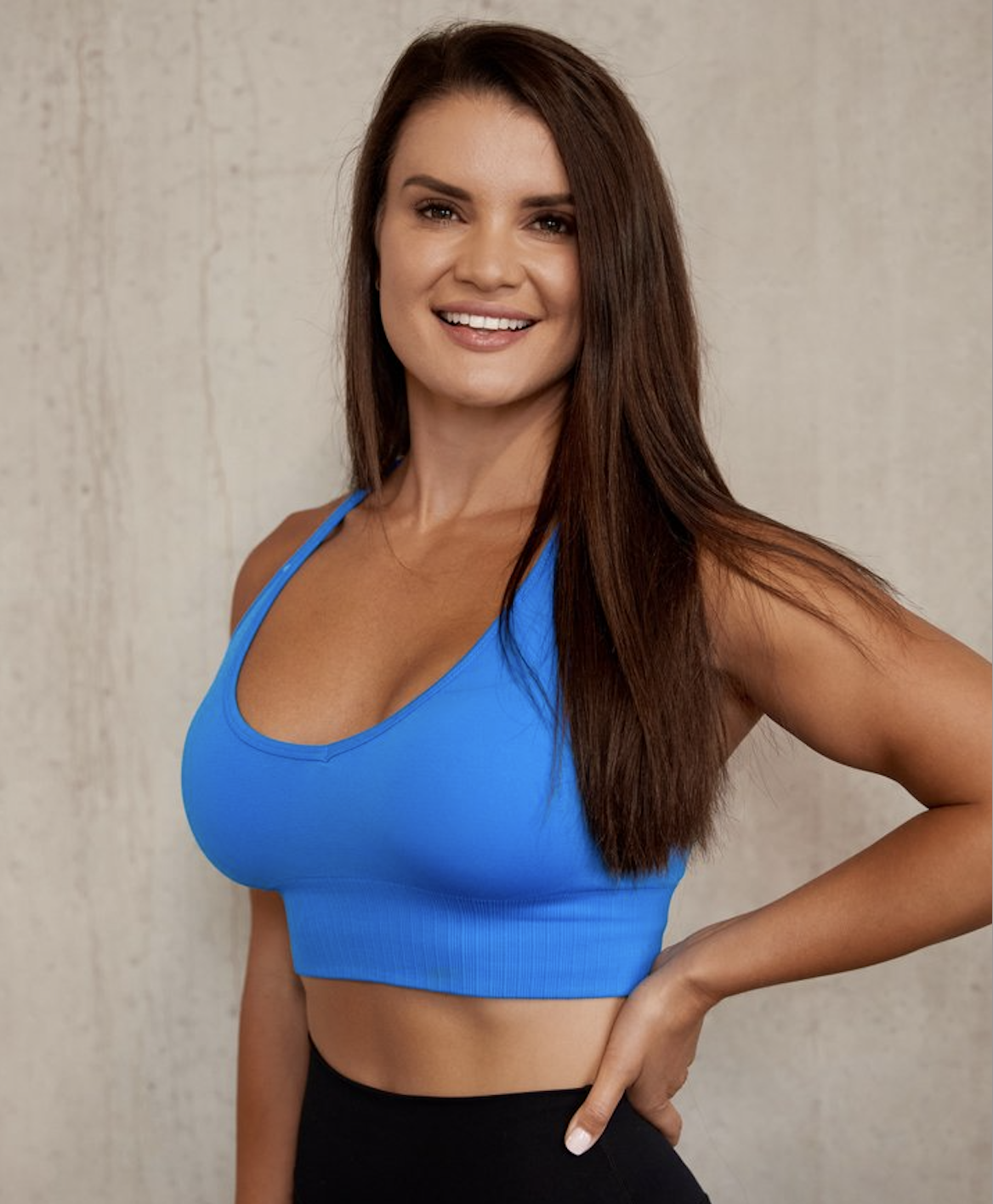
Dani is an osteopath with over a decade of clinical experience treating injured athletes and everyday gym-goers. She's also a WBFF and FMG Pro Bikini Athlete who's stood on stage at the highest level of bodybuilding competition. She runs Paddo Performance, a high-performance gym in Sydney, co-founded the My Training Space app, and leads United Health Education, a global platform teaching movement-based rehabilitation to health professionals. Her mantra is simple: "Movement is Medicine."
In this episode, Dani joined me alongside co-host Naila Ahmed, a holistic therapist who specialises in nervous system regulation and childhood trauma. Together, we unpacked why everyone's chasing trends and shortcuts, why the basics aren't sexy but they work, and why most people who think they're bodybuilders aren't, and that's completely fine. This conversation went deep into pain, fear, identity, business, and what it actually takes to build a body and a life that lasts.
Listen On Apple Podcast
〰️
Listen On Apple Podcast 〰️
Listen On Spotify
〰️
Listen On Spotify 〰️
Lesson 1: The Basics Aren't Sexy, But They're the Only Thing That Works
What It Is:
The "basics" in training are foundational movement patterns; squat, hinge, lunge, push, pull, and core work. In nutrition, it's eating whole foods across all food groups and getting enough protein. The basics are boring. They don't get likes. But they're the 80% that delivers 90% of results.
Why It Matters:
Dani sees it every day: people skip the fundamentals because social media has convinced them there's a shortcut. They jump straight to advanced exercises, complicated programming, or the latest supplement trend. Then they get injured, plateau, or burn out, and wonder why nothing's working. "People are skipping the basics because they're not sexy, because they don't get likes on Instagram," Dani explained. "In most cases, if you just do the basics well and do them often, that will get you the results. But people just think, no, it has to be more than that."
How To Apply It:
Audit your program. Write down every exercise you're doing. Do you have a squat pattern? A hinge? A lunge? A push and pull? Core activation? If not, you've got holes.
Regress before you progress. Can you do a goblet squat with perfect form for 15 reps? If not, you're not ready for a barbell back squat. Master the easier version first.
Warm up and activate. Don't skip your glute bridges, banded walks, or scapular retractions. These "boring" movements prepare your body to move well under load.
Track consistency, not complexity. You don't need 47 exercises. You need six movements done well, three to four times per week, for six months.
Eat whole foods first. Before you buy another supplement, ask yourself: am I eating enough protein? Vegetables? Whole grains? A supplement can't fix a broken foundation.
Pro Tip: If a coach or influencer is always showing you advanced, flashy movements but never teaching you to squat, hinge, or press properly, they're a content creator, not a coach.
Try This Today: Film yourself doing a bodyweight squat. Watch it back. Are your knees caving in? Is your back rounding? If yes, that's your starting point.
Lesson 2: Fear of Injury Is Keeping You Injured
What It Is:
Pain and injury create fear. That fear makes you stop moving. But stopping movement, especially controlled, progressive movement, often makes the problem worse. The key is to regress, rebuild confidence, and prove to yourself that movement doesn't equal danger.
Why It Matters:
"People are just so scared of injuries," I said in the episode. And it's a real fear, if you get injured, you can't work, can't train, can't play with your kids. But Dani's approach flips the script. "You have to prove to them that they can complete that movement," she said. "Get them doing a regressed version. They do that 15, 20 reps, couple of sets, okay, that doesn't hurt. Good. That movement's okay. Then just slowly build into it."
When you avoid movement out of fear, your nervous system learns that movement equals threat. That makes pain worse, not better.
How To Apply It:
Identify the painful movement. Let's say squatting hurts your knee. Don't avoid squatting forever, find a version that doesn't hurt.
Regress the exercise. Try a box squat, or a goblet squat, or even a sit-to-stand from a chair. Go lighter, go slower, reduce range of motion.
Do it pain-free. Complete 2-3 sets of 12-15 reps with zero pain. Let your nervous system learn: "This is safe."
Progress slowly. Add a tiny bit of load, or depth, or speed. One variable at a time. No jumps.
Don't progress until you're ready. As Dani said, "Coaches are too quick to progress. It's so much easier to make an exercise harder, but to sit with the easier version, that's a lot harder for people, even as a coach."
Pro Tip: If something hurts, don't just push through it. But also don't avoid it completely. Find the edge where you can move without pain, that's your starting line.
Try This Today: Pick one movement that scares you or causes discomfort. Do the easiest possible version of it, five reps, no weight, slow and controlled. Notice how your body feels.
Lesson 3: Strength Training Is Nervous System Medicine
What It Is:
Lifting weights isn't just about building muscle or losing fat. It's a form of nervous system regulation. When you're focused on your form, your breath, your tempo, and the weight in your hands, your brain can't also spiral into stress, anxiety, or rumination. Training grounds you in your body.
Why It Matters:
Naila, my co-host and a therapist, put it beautifully: "Lifting weights literally grounds you into the body and the earth. The act of deadlifting or squatting, you have to have that mind-body awareness. You have to be so focused: your form, your technique, your breath work. Everything is happening at once."
Dani agreed. She discovered this when her first coach taught her tempo training, slowing down the movement and controlling every inch. "I realised I wasn't able to stress about all the things I was doing back then and think about tempo at the same time," she said. "It really took away all of my external worries just for that moment in the gym."
In a world where everyone's scrolling, multitasking, and stuck in their heads, strength training forces presence.
How To Apply It:
Use tempo. Try a 3-1-3 tempo: three seconds down, one-second pause, three seconds up. It's humbling. It's hard. And it demands your full attention.
Focus on the muscle. Don't just move the weight. Feel the muscle working. Where's the tension? Are you rushing? Slow down.
Breathe deliberately. Inhale on the eccentric (lowering), exhale on the concentric (lifting). Let your breath anchor you.
Turn off distractions. No phone between sets. No scrolling. Just be in your body for 45-60 minutes.
Notice how you feel after. Not just physically, emotionally. Most people report feeling calmer, clearer, more grounded. That's nervous system regulation.
Pro Tip: If you're anxious or overwhelmed, don't skip the gym, but don't go hard, either. Do slow, controlled movements with moderate weight. Let your body reset.
Try This Today: Do 10 goblet squats with a 4-second descent. No music, no distractions. Just you, the movement, and your breath.
Lesson 4: Most People Aren't Bodybuilders (And That's Completely Fine)
What It Is:
Bodybuilding isn't just "going to the gym and eating chicken and rice." It's a sport that requires discipline, sacrifice, structure, mental resilience, and identity alignment. Dani competed five times and turned pro in 2019. She knows what it takes. And she's clear: most people who think they want to be bodybuilders don't actually want what the sport demands.
Why It Matters:
"A lot of people in the fitness industry think, 'Okay, I've been training at the gym for a couple of years. The next step has to be a bodybuilding show,'" Dani said. "Well, you don't. It's not like you pick up a basketball once and then you have to go play basketball. You still have to enjoy it and be good at it."
Naila added important context: some of her therapy clients tried bodybuilding and came out burned, because the sport mirrored back severe self-worth issues, body image trauma, and childhood wounds. "Not everyone is actually a bodybuilder and supposed to be," she said. "And that's okay, because everyone's got their own path."
The lesson? Don't chase someone else's identity. Find your true form.
How To Apply It:
Ask yourself: do I want this, or do I want the idea of this? Be honest. Do you want to be on stage in a bikini under lights, or do you just want to look good at the beach?
Test the process, not just the outcome. Sign up for a 12-week structured program. Do you enjoy the discipline? The repetition? The meal prep? If not, that's data.
Notice how your body and mind respond. Are you energised, or depleted? Confident, or obsessive? Your body will tell you if this is your path.
Find what fits your identity. Maybe your version of "athletic" is CrossFit, powerlifting, running, yoga, or just consistent strength training. All are valid.
Don't force it. If bodybuilding (or any goal) is making you miserable, you're allowed to stop. That's not failure, that's self-awareness.
Pro Tip: The right goal should challenge you, but it shouldn't destroy you. If you're constantly burnt out, injured, or mentally struggling, it's not the right fit.
Lesson 5: Building Multiple Identities Isn't About Doing More: It's About Saying Yes to Yourself
What It Is:
Dani is an osteopath, a pro athlete, a business owner, a podcast host, an app founder, and an educator. Most people assume she's "doing it all." But her secret isn't doing more, it's ruthless prioritisation, small trusted teams, and systems that allow her to say no to almost everything.
Why It Matters:
I asked Dani how she balances it all. Her answer surprised me. "I'm not actively competing in bodybuilding anymore. I haven't since 2019," she said. "There's only so much I feel that we can do. You don't want to be a jack of all trades."
She uses Google Calendar religiously. She has a small, trusted team for each business. And she's learned to say no, a lot. "It's not saying no," she explained. "It's saying yes to yourself. When you say yes to one thing, you're saying no to something else."
The lesson? You don't build a life by adding more. You build it by protecting what matters.
How To Apply It:
Write down everything you're doing. Work, side projects, hobbies, commitments. All of it.
Highlight what's aligned. Which activities connect to your core identity or long-term goals? Which are just noise?
Cut or delegate the rest. If it doesn't serve you, stop doing it. If someone else can do it, hand it off.
Time-block your calendar. Dani swears by Google Calendar. Block time for the big rocks first; training, deep work, family. Everything else fits around that.
Say no without guilt. Practice this: "That sounds great, but I'm fully committed right now." You don't owe anyone an explanation.
Pro Tip: Every time you say yes to something new, ask: "What am I saying no to?" If the answer is sleep, training, or sanity, don't do it.
Try This Today: Open your calendar. Block one hour tomorrow for something that matters to you; training, creative work, rest. Protect it like a client appointment.
Lesson 6: Movement: Based Rehab Beats Passive Treatment for Long-Term Results
What It Is:
Traditional allied health often relies on hands-on therapy, massage, manipulation, ultrasound. Dani's approach, shaped by working with the late Dr Andrew Lock, flips that. She teaches people how to move better, activate dormant muscles, and rebuild strength. Movement is the medicine, not the massage table.
Why It Matters:
"I can treat you on the bench for an hour and you feel great, but if you go back into the gym and you don't know how to actually move your body, the problem's going to come back," Dani explained. Through United Health Education, she's now teaching this philosophy to practitioners worldwide. The goal? Empower people to fix themselves through movement, not depend on weekly adjustments.
How To Apply It:
If you're in pain, don't just get treatment, learn to move differently. Ask your physio or osteo: "What exercises can I do at home?"
Prioritise activation and control. Glute bridges, dead bugs, banded walks, these aren't glamorous, but they teach your body how to stabilise and move safely.
Rebuild load tolerance gradually. Start with bodyweight, then light resistance, then progressive load. Your body needs to learn it can handle stress.
Don't become dependent on passive treatment. Hands-on work has a place, but if you're seeing someone twice a week for months and nothing's changing, you need movement, not more massage.
Pro Tip: The best practitioners teach you how to not need them anymore.
Mini Case: Naila's Dad and the Power of Lifelong Strength
Naila shared a deeply personal story during the episode. From age 15, she watched her father's health decline due to Parkinson's disease. He passed away when she was 27. "Seeing him deteriorate, not being able to move his body, walk, swallow, it was the most painful thing I've ever experienced," she said.
Now, in her work as a therapist, she tells clients: "Think about your 80-year-old self. Where's that muscle mass when you're 80 and might have a fall?"
Dani echoed this. "We need to still be promoting strength training... it's going to protect you when you're older. It's going to keep you young."
"Movement is medicine, and so is owning who you are becoming." - Dr Dani Antonellos
Quick Wins Checklist (Do These Today)
Film yourself doing a bodyweight squat and check your form
Pick one "boring" activation exercise (glute bridges, banded walks) and do 2 sets of 15 reps
Block one hour in your calendar tomorrow for training or rest and protect it
Unfollow three fitness accounts that make you feel anxious or inadequate
Do 10 slow goblet squats with a 4-second descent, no distractions, just presence
Ask yourself: "Is this goal mine, or am I chasing someone else's identity?"
Closing Insight
The basics aren't broken. We are.
We've been sold the idea that if something's simple, it can't be powerful. That if it's not new, it's not worth doing. But the truth is this: the squat pattern hasn't changed. The hinge hasn't changed. Your body's need for protein, sleep, and progressive load hasn't changed. What's changed is the noise around it.
Dani's career is proof that you don't have to choose between being a clinician and a competitor, between building businesses and building your body. But you do have to choose your yeses carefully. You do have to protect the basics. And you do have to move, not because it's sexy, but because it's medicine.
If you're in pain, movement is the cure. If you're stressed, the barbell will ground you. And if you're lost in someone else's highlight reel, the best thing you can do is close the app, open your calendar, and ask: what does my true form actually look like?
Watch me on YouTube
Listen to the True From Podcast:
Apple Podcast -
https://podcasts.apple.com/au/podcast/the-true-form-podcast/id1593804496
Spotify -
https://open.spotify.com/show/6RVH2O6MbLOCohBKPhXO0L?si=ZI8D3MnhSfSjnohSXYN_MQ
Everywhere els -
https://trueform.buzzsprout.com
Sponsor: If you’re interested in trying red and near-infrared light therapy for recovery, pain, and overall health, check out Lumaflex. Use code TRUEFORM for 10% off: https://lumaflex.com.au/TRUEFORM