DECIDE: How Courage and Extreme Discipline Change Your Life
What an ultra-endurance athlete, ex-soldier and coach can teach us about discipline, calling and choosing your pain.
Watch On YouTube
〰️
Watch On YouTube 〰️

TL;DR
Discipline isn’t something the military, a coach or a program “gives” you, it’s a choice you train through structure, systems and small reps.
Communicating in the right “frequency” and authority is the difference between clients ignoring you and taking action.
Your life changes when you stop trying to serve “everyone” and start choosing the right clients, the right circle and the right calling.
The DECIDE framework turns big, scary decisions into clear steps you can actually follow.
Courage is not feeling fearless, it’s choosing the harder, aligned path even when you’re cold, scared and tired.
🎧 Available on Spotify, Apple Podcasts, YouTube or wherever you listen to your podcasts.
Introduction
What would make someone sell their house, sleep in a storage unit and in the back of a car at minus 30, just to chase a race that pays nothing; 10 Ironmans in 10 days across six Hawaiian islands?
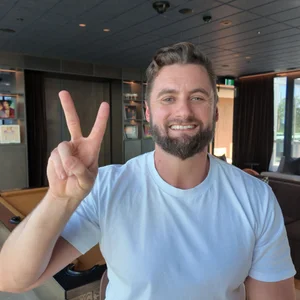
That’s the lived reality of JD Tremblay, a French Canadian ex-military engineer, naturopathic practitioner and ultra‑triathlete who joined me on The True Form Podcast to talk about courage, calling and discipline. He’s one of only a handful of people on the planet to complete the Epic Deca (10 Ironmans in 10 days), and at the same time he’s a dad, a philanthropist working with the UN, and a coach helping others find their own path.
In this episode, we dug into the difference between structure and discipline, how “frequencies” and authority shape behaviour, and what it really costs to live a life that matches your calling. JD shared the DECIDE framework he used to make brutal choices, from sleeping in his car to training for a world championship in Malta while turning 40.
If you’re a coach, PT or just someone who knows there’s more in you, this article pulls out the most practical lessons from our conversation, and turns them into steps you can start using today.
Listen On Apple Podcast
〰️
Listen On Apple Podcast 〰️
Listen On Spotify
〰️
Listen On Spotify 〰️
Lesson 1: Discipline vs Structure: Stop Waiting To Be “Given” Discipline
What It Is:
Discipline is your decision to act consistently toward a goal, while structure is the environment, rules and routines around you. Structure can support discipline, but it can’t replace it.
Why It Matters:
Many of us secretly hope that joining the military, signing up to a program or hiring a coach will “fix” our discipline. JD’s experience shows this is backwards. The military gave him structure – early mornings, bed inspections, rules, but discipline started earlier, with his dad and his own choices. Seeing this clearly is powerful. It stops you waiting for external saviours and puts the responsibility (and power) back in your hands.
As JD puts it, the military “gives you the structure, not the discipline.” Once basic training ends, no one forces you to make your bed, train harder or eat better. That’s on you.
How To Apply It:
List the structures you already have. Work schedule, gym membership, training plan, coach, family routines, write them down.
Circle what you’re actually using. Be honest. A program you ignore doesn’t count as structure.
Pick one daily action that’s 100% your choice. For example, making your bed, a 10-minute walk, or logging your food, something small but non‑negotiable.
Tie it to identity, not mood. Instead of “I feel like training,” think “I’m someone who trains at 7 am, feelings or not.”
Use structure to make discipline easier. Lay out clothes the night before, set alarms, train with a friend, book sessions in your calendar.
Review weekly. Ask: did I act with discipline inside the structure I have, or just lean on excuses?
Pro Tip:
Don’t add new structure until you’re consistently using the structure you already have.
Try This Today:
Tomorrow morning, make your bed perfectly the second you get up, not because it “matters,” but because you said you would.
Lesson 2: Frequencies and Authority: Why People Don’t Listen (And How To Change It)
What It Is:
“Frequencies” are the way a message is delivered tone, context, emotion and “authority” is the perceived weight behind it story, credentials, legal power or lived experience. Together, they determine whether someone actually hears you and acts.
Why It Matters:
You can give people the best plan in the world and they still won’t follow it. As a PT, coach or leader, it’s easy to assume “they don’t care” or “they’re lazy.” JD flips this. Often, the message is arriving on the wrong frequency, from the wrong type of authority.
He uses a simple example: a partner asks you to mow the lawn three times. You ignore it. Then a mate says, “My wife loves it when I mow the lawn shirtless,” and suddenly you sprint outside. Same action, different frequency and authority. When you understand this, you stop shouting louder and start speaking smarter.
How To Apply It:
Identify your natural frequency. Are you calm, intense, jokey, blunt, nurturing? Own it, that’s part of your power.
Map your authority. Story (your journey), education (degrees, certs), legal/role (coach, doctor, military rank). Which is strongest for you right now?
Match the person, not your ego. Some clients respond to story (“I’ve been where you are”), others to data (“here’s what the tests show”), others to firm direction (“this is the plan”).
Lead with love as your highest frequency. JD talks about love as a frequency you can’t fake, genuine care. When people feel that, they listen differently.
Stop fighting for the wrong ears. If someone only respects doctors and you’re not one, don’t try to be. Either bring in that authority (e.g. refer out, collaborate), or accept they’re not your person.
Ask for feedback. “When does what I say really land for you?” Listen to the answer and adapt.
Pro Tip:
The goal isn’t to be every frequency, it’s to know yours, own it, and work with people who respond to it.
Try This Today:
With one client or friend, ask: “What made you finally take action on [thing]?” Notice whether it was story, data, tone, or timing.
Lesson 3: Choose Your Clients and Circle: Don’t Chase “Everyone”
What It Is:
Instead of trying to help everyone, pick the people you are best suited to serve and deliberately build your life around those clients, friends and partners.
Why It Matters:
In the episode, JD is blunt about coaches who say, “I just need all the clients; I just need to make 10K a month.” That mindset leads to desperation, poor fits and burnout. When you work with anyone who waves a card, you end up reacting instead of deciding. You accept people who drain you, don’t respect your authority and don’t align with your values.
On the flip side, when you intentionally choose your clients and circle, you create what JD calls an almost guaranteed path to success – as long as death or some major external event doesn’t break the dynamic. The right people amplify you; the wrong people slow you down or pull you off course entirely.
How To Apply It:
Define your “ideal human,” not just “ideal client.” Age and goals matter less than values and attitude (e.g. honest, willing to do hard things, open to feedback).
Start tiny and real. JD talks about starting with a $20 client, cheap, but with a clear outcome and the promise of a testimonial or short video. Don’t overcomplicate the first step.
Ask for one clear win and one clear proof. For early clients, agree: “In 4-8 weeks, we’ll aim for X. In return, if you’re happy, I’d love a 10-20 second video about your experience.”
Build by word of mouth. Encourage happy clients to talk about you to people they already like and respect. Those referrals are far more likely to fit your values.
Say ‘no’ faster. If someone won’t commit, can’t follow basic instructions, or clashes with your values, let them go, even if they’re waving money.
Curate your friends and mentors the same way. Choose people whose “frequency” and authority move you towards your calling, not away from it.
Pro Tip:
A “cheap” client who gives you a strong testimonial and three good referrals is more valuable than a high‑ticket nightmare who drains your energy.
Try This Today:
Write one sentence: “The kind of person I’m built to help is…” Fill it in honestly, then read it before you post or pitch anything this week.
Lesson 4: Calling and Identity: Stop Trying To Be Someone Else’s Body Part
What It Is:
You have a role you’re uniquely suited for your “calling.” Trying to live someone else’s calling (because it looks more glamorous or profitable) is like a finger trying to be an ear.
Why It Matters:
JD uses a Christian picture of the “body of Christ”: different parts, different functions. Whether you’re religious or not, the point is clear. Social media constantly pushes you to become “the next” someone, the next Goggins, the next famous coach, the next entrepreneur with a laptop on a beach. The problem is, you’re not them.
He gives down‑to‑earth examples: people who would be brilliant electricians being pushed into university because “everyone in the family has a degree,” or people chasing high‑ticket coaching clients when they’d actually thrive organising events or running trades. When you fight your own design, you end up numb, resentful or addicted just to cope.
How To Apply It:
Notice what pulls you, not what impresses you. In “The Alchemist,” the shepherd feels a deep pull to go on a journey. What are the things you can’t stop thinking about, even when they don’t make sense?
List where you’re already “weirdly good.” Skills that feel natural to you but hard for others (organising, speaking, listening, systems, technical work).
Separate fear from wisdom. Fear says, “Don’t try this, you might fail.” Wisdom says, “This path will seriously harm you or your family.” Don’t confuse the two.
Experiment small. Before you quit your job, test your calling in low‑risk ways, coach two clients, plan one event, start one small project.
Stop copying people out of context. It’s fine to learn from big names, but remember JD’s point: reading billionaires from the back seat of a frozen car didn’t help him as much as studying people one or two steps ahead.
Accept that value is different from visibility. The world may pay more attention to certain roles, but that doesn’t mean your quieter role is less valuable.
Pro Tip:
If you constantly need to numb yourself (with work, food, screens or substances) to tolerate your current path, that’s a signal you’re off‑calling, not a sign to push harder.
Try This Today:
Write down three people you envy. Then, next to each name, write what you think you actually want that they have (freedom, impact, money, attention). Ask yourself: “Is there a version of this that fits who I really am?”
Lesson 5: The DECIDE Framework: Making Brutal Decisions Without Losing Yourself
What It Is:
DECIDE is JD’s acronym for how he made some of the hardest choices of his life, including selling his house and living in a storage unit to fund the Epic Deca. It’s a way to base decisions on data, capacity and calling, not just emotion.
(Note: The full breakdown isn’t spelled out letter‑by‑letter in the transcript, but several key components are explained.)
Why It Matters:
We romanticise big decisions: “follow your dreams,” “burn the boats” but the reality is messy: kids, bills, mental health, responsibilities. JD didn’t just leap blindly. He looked at data (what others had done), his energy, cognitive load (what he could handle), and inflammation (the physical stress his body was under). He knew he wouldn’t feel “happy” sleeping in a car at minus 30, so he didn’t use feelings as his compass.
A framework like DECIDE helps you avoid both reckless impulsiveness and endless paralysis.
How To Apply It (adapted from JD’s explanation):
D - Data over emotion. Ask: “What are the actual facts?” Look at people one or two steps ahead of you. What did they do? What did it cost them?
E - Energy. Check your current energy levels. Are you already exhausted? How much extra load can you realistically carry right now?
C - Cognitive load. Consider what’s on your mind: work stress, kids, health. If adding a big new thing makes you likely to snap at people you love, adjust the plan.
I - Inflammation. Notice your physical state, poor sleep, junk food, chronic pain. Big decisions made from a highly inflamed, run‑down body are often poor ones.
D - Decision timing. Some opportunities are time‑sensitive, others aren’t. Ask, “What happens if I wait 3-6 months while I improve my energy and inflammation?”
E - Execute. At some point, thinking must turn into action. Start with the smallest irreversible step that moves you in the right direction.
Pro Tip:
Don’t use DECIDE to justify what you already want. Use it to test whether your desire is actually workable given your current reality.
Try This Today:
Pick one decision you’ve been stuck on. Spend five minutes listing the data only, no feelings, just facts. See how that changes your sense of the situation.
Lesson 6: Courage and Choosing Your Pain: Couch vs Second Workout
What It Is:
Courage isn’t about feeling fearless; it’s choosing the harder, aligned pain instead of the easier, numbing pain.
Why It Matters:
JD is clear that there’s pain on the couch and pain in the second workout. One leads to regret, health issues and feeling like you’ve wasted your potential. The other hurts in the moment but builds strength, self‑respect and opportunities you can’t see yet.
He doesn’t minimise how hard it was: sleeping at truck stops in a frozen car, seeing his son on weekends while pretending everything was fine, and then going back to a storage unit to sleep. He wasn’t laughing at the time. But he saw that pain as part of a bigger story he was willing to live.
How To Apply It:
Name your two pains. For any situation, identify the “easy pain” (short‑term comfort, long‑term regret) and the “hard pain” (short‑term effort, long‑term growth).
Connect the hard pain to a clear why. Training twice a day is pointless suffering if you don’t know what it’s for. For JD, it was world‑class races and becoming the man he believed he was meant to be.
Shrink the hard pain into reps. Instead of “transform my life,” commit to “show up to the gym three times this week,” or “make three sales calls.”
Normalise fear. Expect to feel scared and under‑prepared. Courage is acting with those feelings present.
Keep one promise to yourself daily. It can be tiny. The habit of keeping your own word is the foundation of courage.
Tell the truth to one safe person. Share where you’re choosing the couch pain. Honesty makes it harder to hide from yourself.
Pro Tip:
If your “courage” constantly destroys your health or relationships, it’s probably ego or escapism wearing a courage mask. Real courage includes responsibility.
Try This Today:
Tonight, ask yourself: “Where did I choose the couch today, and where did I choose the second workout?” No judgement, just awareness.
Mini Case/Example
“People see me for my accomplishments, but I see me from all of the failures.” - JD Tremblay
He talks about picking up his son from his ex‑partner’s place, taking him to a play centre, buying him a slushie and a chocolate bar, then dropping him back and going to sleep in his car at a truck stop in the middle of a Canadian winter.
From the outside, that season could look like failure: broke, divorced, living between a storage unit and a car. From the inside, JD saw it as a purposeful sacrifice, part of the story he would later tell to help others and build real authority. That perspective shift, failure as raw material, not final verdict is one of the most powerful takeaways from his journey.
Quick Wins Checklist (Do These Today)
Make your bed or complete one tiny task immediately after waking, just because you said you would.
Write one sentence about the kind of person you’re built to help, and say no to one thing that doesn’t fit it.
Ask one client, friend or partner: “When does what I say really land for you?” and listen for their frequency.
Take five minutes to list the raw data (no feelings) around one decision you’re stuck on.
Name one “easy pain” and one “hard pain” in your life right now and choose the hard one once today.
Capture one short win (a message from a client, a PB, a grateful comment) in a note on your phone to start “stacking success.”
Closing Insight
Underneath all the extreme stories: 10 Ironmans in 10 days, storage units, frozen cars, this conversation is about something simple and uncomfortable: you are responsible for the life you build. Structures can help, mentors can guide, tools and AI can support, but none of them can choose your calling or do your reps for you.
JD’s story shows that discipline is not a personality trait you’re born with; it’s a muscle that grows when you act in line with who you’re meant to be, especially when it hurts. His ideas about frequencies and authority remind us that influence is as much about how and who we are as what we know. And the DECIDE framework proves that even the biggest, scariest choices can be broken into pieces you can actually handle.
You don’t need to sell your house or run 10 Ironmans to apply this. You just need to start making one more decision from courage instead of fear, one more action from calling instead of copying. If you do that consistently, your life will start to look very different from the inside out.
Watch me on YouTube
Listen to the True From Podcast:
Apple Podcast -
https://podcasts.apple.com/au/podcast/the-true-form-podcast/id1593804496
Spotify -
https://open.spotify.com/show/6RVH2O6MbLOCohBKPhXO0L?si=ZI8D3MnhSfSjnohSXYN_MQ
Everywhere els -