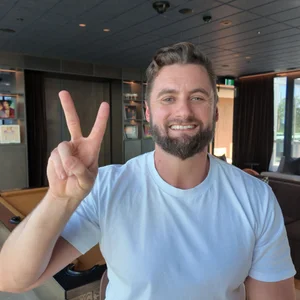
You Don’t Need More Motivation. You Need a System
David Fullmer’s seven-day approach to daily habits, personal accountability and putting growth into practice
Watch On YouTube
〰️
Watch On YouTube 〰️
TL;DR
Give each day a focus: Dave’s B7 framework turns broad personal-growth ideas into a weekly rhythm you can remember.
Notice before you change: Watch your self-talk and behaviour, then give yourself a practical next step rather than another motivational speech.
Make room for more than work: Quiet, gratitude, forgiveness and time with people you love all have a place in Dave’s week.
Treat growth as practice: The useful question is not just who you want to become, but whether today’s choices move you in that direction.
🎧 Available on Spotify, Apple Podcasts, YouTube or wherever you listen to your podcasts.
When does knowing better become doing better?
You can finish a book feeling ready to change your life, then reach the end of the week without doing anything differently. The ideas made sense. Putting them into practice was the part that never quite happened.
That gap was what I wanted to explore with Dave Fullmer on The True Form Podcast. I’m interested in good information, but I’m more interested in what someone can actually do with it once the conversation ends.
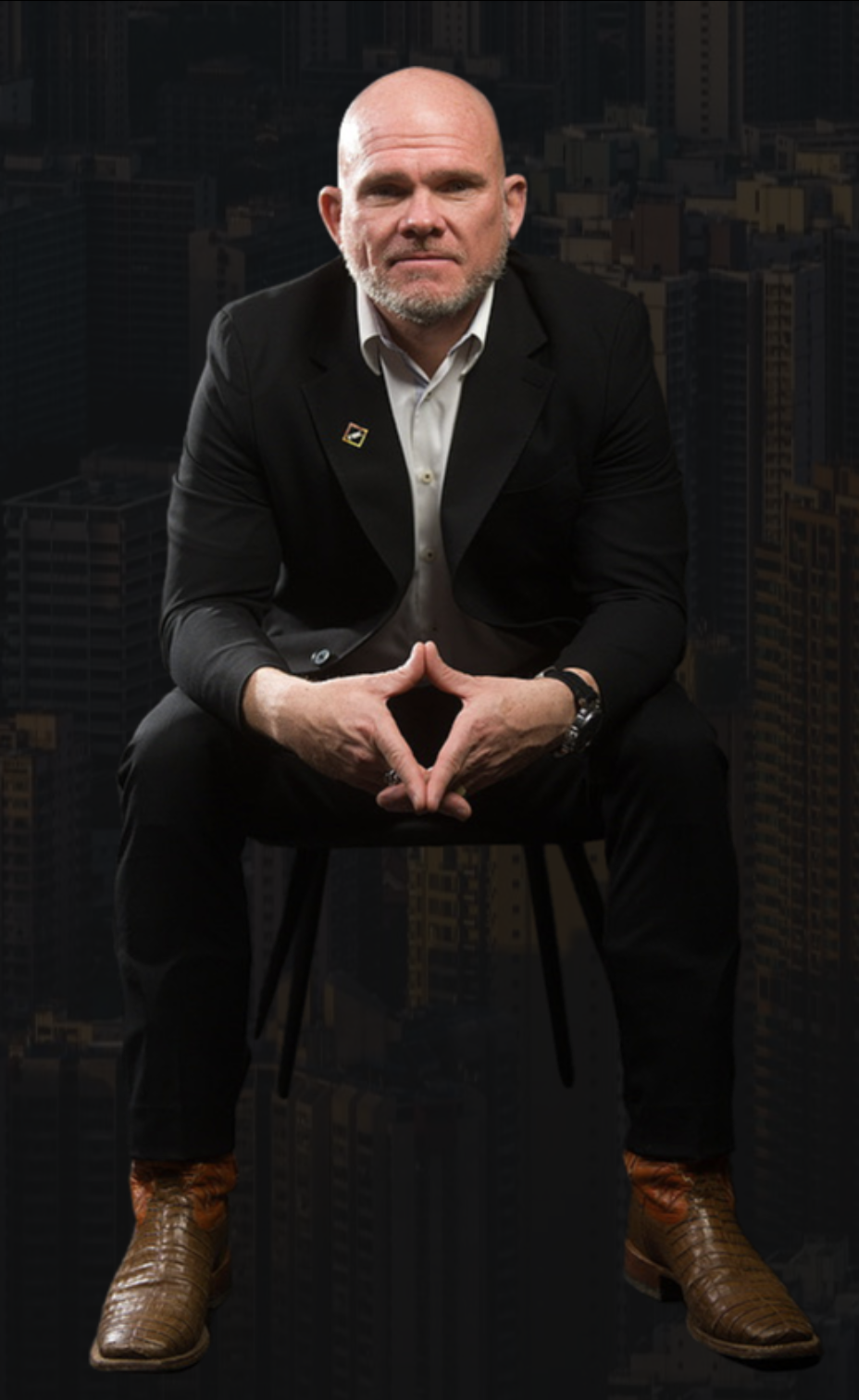
Dave is an entrepreneur, speaker and author of Becoming Seven: The Superhuman Rhythm. In our conversation, he described growing up around personal-development seminars, then spending years reading and learning while wondering when he was going to apply it all.
His response was to give each day of the week a focus. Instead of holding a long list of ideas in your head, you have a daily reminder of something to practise.
What I liked was the simplicity. These daily habits are not another invitation to overhaul your whole life by Monday morning. They offer a way to bring your attention back to something useful, then do something with it.
Here are seven lessons from the conversation, along with ways you could try them in your own week.
Listen On Apple Podcast
〰️
Listen On Apple Podcast 〰️
Listen On Spotify
〰️
Listen On Spotify 〰️
Give motivation a job
Dave starts his framework with Motivation Monday. It is a chance to revisit your goals, write down what matters and remember why you are putting effort into the week ahead.
But he is blunt about the difference between getting excited and getting somewhere. As he puts it: “You’re just a motivated idiot.”
The line is funny, but it points to a question worth asking: what is all this motivation leading to? Another seminar, another saved video, or a decision you are actually going to follow through on?
My practical take is to finish your Monday reflection with one commitment. If your goal is to get stronger, choose your training sessions. If it is to be more present at home, choose a time when your phone goes away.
Keep the commitment small enough that you can say what doing it would look like. “Be healthier” leaves plenty of room to negotiate with yourself. “Train on Tuesday and Thursday before work” gives you something concrete to return to.
At the end of the week, review the action rather than how inspired you felt. Did you follow through? If not, what needs adjusting?
That gives motivation a useful role. It helps you choose a direction, while the commitment gives you something to practise after the initial excitement passes.
Track your choices without turning on yourself
Tracking Tuesday is Dave’s day for watching how he shows up. That includes his thoughts, attitude, conversations and the decisions he might otherwise explain away.
One of his examples was catching himself wanting to top someone else’s story. He realised that having something to contribute did not mean he needed to take over the moment. Sometimes the better choice was to listen.
That makes accountability much more practical than simply telling yourself to try harder. It becomes noticing a specific behaviour while there is still an opportunity to respond differently.
Dave also described writing down a negative thought and coming up with five possible solutions. He was clear that this was not about pretending everything would be fine.
You could try a shorter version tonight:
Notice: What situation brought out a reaction I was not happy with?
Own: Which part of my response was within my control?
Choose: What could I do differently next time?
Taking ownership does not mean you caused every difficult thing that happened to you. The useful distinction is between what happened and what you can influence now.
The progress to look for is not a week without negative thoughts. It is catching one familiar reaction and giving yourself another option.
Leave some space without filling it
Whisper Wednesday is Dave’s invitation to turn down the input. He described quiet walks, time in nature and driving without music so he could listen to his own thoughts.
This was something I connected with in the conversation. I spoke about how easily every spare moment gets filled with music, podcasts, social media or television. There is not always much space left to be with yourself.
You do not need to copy Dave’s long walks to experiment with the idea. My suggestion is to take ten minutes of an ordinary activity and leave the headphones off.
Walk around the block, sit outside or do a simple household task without adding another voice. If a thought keeps returning, write it down afterwards rather than trying to solve everything on the spot.
Dave connects this practice with intuition. You can explore that perspective without assuming every feeling is an instruction you should follow.
Start by noticing what comes up when you are not being entertained or directed. Is there a decision you have been avoiding? Are you tired? Is something taking up more attention than you realised?
There does not have to be a breakthrough. You might simply finish the ten minutes with a clearer sense of what is on your mind.
Make gratitude specific enough to say out loud
Thankful Thursday is not just a private list for Dave. He talks about calling people, sending messages and noticing the effort behind things he might otherwise take for granted.
Later in our conversation, he told a story about recognising the man keeping an airport bathroom clean. What stood out to me was that he noticed someone whose work could easily have stayed invisible.
That is an approachable place to start with gratitude. You do not have to feel grateful for everything in your life to acknowledge one person’s contribution.
My suggestion is to send one specific thank-you this Thursday. Instead of “Thanks for everything,” name what the person did and why it mattered to you.
It could be a friend who checked in, a colleague who made your day easier or someone at home who handled something you barely noticed at the time. Give them enough detail to know you actually saw it.
Dave also talks about feeling grateful for difficult experiences. That is his perspective, not a requirement to be thankful for being hurt.
Begin with something genuine. The action is complete when you have expressed it, regardless of whether you get a reply or feel instantly different afterwards.
Letting go does not mean letting everyone back in
Forgiveness Friday brought us to the past, current relationships, forgiving yourself and offering a genuine apology when you have done something wrong.
One distinction Dave made was that you can let go of resentment without bringing someone back into your close circle. Forgiveness and access are not the same decision.
We also discussed his windscreen and rearview-mirror analogy. You can look back to learn where you have been without trying to steer your entire life by what is behind you.
I would turn that into two questions: what do I need to remember from this experience, and what do I no longer need to keep replaying?
Write the answers privately before deciding whether any conversation is needed. Your next step might be an apology, a clearer boundary or simply recognising that an old mistake does not have to become your permanent identity.
There is no need to force contact with someone who harmed you, or to give yourself a deadline for feeling differently. Some experiences need time and support, not a weekly tick box.
The useful aim is to identify what moving forward could look like while keeping the lesson and any necessary boundary intact.
Put connection on the calendar, not just the wish list
Satisfaction Saturday is about enjoying life with the people you love. Dave explains it through the idea of “love you money”: wanting resources so he can create experiences, help others and spend meaningful time with his family.
That was the part of his money philosophy I wanted to explore. What are you working towards, and does your life currently contain any of it?
Dave talks about travelling to surf with his children. Your version does not need to involve a flight or a big budget. It might be breakfast with a mate, a walk with your partner or an afternoon with family where you are not half-working.
Choose the experience first, then make it fit the time and money you actually have. Put it in the calendar with the same intention you would give another commitment.
We also talked about the people around you. Dave values having peers and more experienced people he can learn from, rather than always being the person with the answers.
Consider who you would genuinely like to spend time with this week. The point is not to turn every friendship into a self-improvement project, but to make room for connection instead of continually postponing it.
Measure this one by whether you made the time, not by what you spent.
Practise humility, then start again
Supplication Sunday is explicitly connected to Dave’s Christian faith. He describes acknowledging God and accepting that he cannot do everything alone.
He explains it through jiu-jitsu. After years on the mat, one of his biggest lessons has been knowing when to tap rather than letting pride keep him in a position that could hurt him.
You do not have to share his faith to reflect on the question underneath that example: where are you refusing to acknowledge that you need help?
For someone who is religious, Sunday might include prayer and reflection. If that is not your practice, my suggested adaptation is a quiet weekly review and an honest conversation with someone you trust.
Ask where you are forcing something, what you do not know yet and who might help you see it differently. Then choose one adjustment for the coming week.
That is different from giving up responsibility. You are still deciding what to do, but without assuming you must have every answer yourself.
Near the end of our conversation, I asked Dave what “becoming” meant to him. His answer brought us back to everyday choices: the words you use, the work you do and the way you respond.
The framework is something to repeat, not a test you pass once.
Quick wins for the week ahead
Book one action: Turn a broad goal into a specific commitment with a day and time.
Catch one reaction: Write down what happened, what you controlled and what you could try next time.
Leave ten minutes quiet: Take a walk or do a routine task without headphones.
Send one proper thank-you: Name the action you appreciated and why it mattered.
Arrange something simple: Make time with someone you love without waiting for a bigger budget or a quieter month.
Your next choice is a place to start
What I took from Dave was not that everyone needs to organise their week exactly like he does. It was that personal growth needs somewhere to happen beyond the book, the conversation or the moment you feel inspired.
Monday gives him a reminder to reconnect with purpose. Tuesday brings his attention to his behaviour. The rest of the week makes room for things that could otherwise get pushed aside.
You might try the full rhythm. You might begin with one part of it and see what you notice.
Either way, you do not have to wait until you have a perfect routine or a completely different life. Choose one daily habit you can practise with the time and energy you have now.
Then ask yourself the question Dave’s closing reflection left me with: does this choice fit the person I want to become?
Hear the full conversation
Episode 309, “You Don’t Need More Motivation. You Need a System | David Fullmer,” explores these ideas through Dave’s stories, his seven-day framework and our conversation about ownership, relationships and purpose.
🎧 Available on Spotify, Apple Podcasts, YouTube or wherever you listen to your podcasts.
Watch me on YouTube
Listen to the True From Podcast
Apple Podcasts - https://podcasts.apple.com/au/podcast/the-true-form-podcast/id1593804496
Spotify - https://open.spotify.com/show/6RVH2O6MbLOCohBKPhXO0L?si=ZI8D3MnhSfSjnohSXYN_MQ
Everywhere els - https://trueform.buzzsprout.com
Sponsor: If you’re interested in trying red and near-infrared light therapy for recovery, pain, and overall health, check out Lumaflex. Use code TRUEFORM for 10% off: https://lumaflex.com.au/TRUEFORM