How to Take Action When You Know What to Do but Feel Stuck
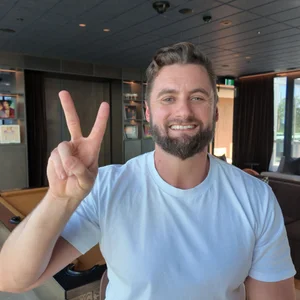
Corbin Bruckshaw joins The True Form Podcast to explore personal values, the self-improvement trap and building the confidence to begin.
Watch On YouTube
〰️
Watch On YouTube 〰️

TL;DR
Give each day a focus: Dave’s B7 framework turns broad personal-growth ideas into a weekly rhythm you can remember.
Notice before you change: Watch your self-talk and behaviour, then give yourself a practical next step rather than another motivational speech.
Make room for more than work: Quiet, gratitude, forgiveness and time with people you love all have a place in Dave’s week.
Treat growth as practice: The useful question is not just who you want to become, but whether today’s choices move you in that direction.
🎧 Available on Spotify, Apple Podcasts, YouTube or wherever you listen to your podcasts.
You know what to do. So why aren’t you doing it?
You’ve read the book. You’ve listened to the podcast. You’ve made the plan, bought the gym gear or saved another video that explains exactly what you need to do next. But when it comes time to actually do it, something gets in the way.
That gap between knowing and doing was at the centre of my conversation with Corbin Bruckshaw, a behavioural coach and founder of Let’s Get Human. His interest in understanding people started early, through family challenges, feeling like an outsider and finding his way into personal-development books.
What interested me most wasn’t just the ideas he had collected. It was the question of how he put them into practice, and where he had struggled to do that himself.
Corbin spoke openly about being afraid of getting things wrong. Despite years of learning, he had still questioned whether he was ready to put himself out there.
If you’re wondering how to take action on something you keep putting off, that tension is worth exploring. Is the goal genuinely yours? Are you missing a skill or a workable plan? Or have you reached the point where another round of preparation is delaying a small step you could take now?
Listen On Apple Podcast
〰️
Listen On Apple Podcast 〰️
Listen On Spotify
〰️
Listen On Spotify 〰️
Look at what your life currently reflects
One of the most useful parts of this conversation was Corbin’s approach to exploring values. Rather than starting with a list of impressive-sounding qualities, he suggested looking at four areas: space, time, energy and money.
What do you surround yourself with and actually use? Where does your time go? What do you find engaging? Where are you choosing to spend the money available to you?
I liked this because it moves the conversation away from who we think we should be and towards what is happening right now. It is easy to write “health”, “family” or “financial freedom” on a page. Looking at an ordinary week gives you something more concrete to work with.
That does not make your calendar or bank statement a perfect measure of what you care about. Work, caring responsibilities and limited resources can shape your choices. I would use this as a reflection exercise, not a verdict on your character.
Try this: Look back over the last seven days. Write down where your discretionary time and money went, what held your attention and what you would like to make more room for.
What this gives you: A clearer starting point. Instead of telling yourself to become a completely different person, you can identify one gap between your current routine and the life you want to build.
Connect the goal to something that matters to you
A recurring question in the episode was whose expectations we are trying to meet. Are we choosing something because it matters to us, or because it looks like the thing we should want?
This comes up in fitness all the time. Someone might arrive with a target weight, but the number is only part of the story. What would reaching that goal allow them to do? What would they like to feel more capable of?
Corbin’s suggestion was to connect a goal with something the person already values. In a fitness context, that might mean thinking about the role movement could play in family life, independence or doing an activity you enjoy.
The point is not that a meaningful reason makes every session enjoyable. It is that “I should exercise” and “I want to be able to do this particular thing” give you different starting points for planning.
Try this: Finish the sentence: “I want to work towards this because it would help me…” Keep going until the answer means something to you, rather than sounding like something you should say.
What this gives you: A reason to return to when the initial excitement wears off. It may also help you realise that the goal needs adjusting, rather than that you need another lecture about discipline.
Notice when learning becomes a way of delaying
I asked Corbin why he had taken action rather than getting caught in an endless cycle of books, seminars and podcasts. It led to one of the most honest parts of the conversation.
He described wanting to know his subject thoroughly before speaking publicly or helping people. He did not want to be someone who read a book and immediately started presenting himself as an authority.
There is something important in that. Preparation matters, and some work requires formal training, qualifications or supervision. Taking action should not mean pretending you have expertise you have not developed.
But Corbin also recognised that he had waited longer than he now wished he had. At some point, learning had become tangled up with his fear of being wrong.
That is the self-improvement trap I would watch for: repeatedly preparing for an action without ever making room to try it.
Try this: Before you save another resource on the same topic, choose one idea from something you have already learned. Apply it to a small, appropriate task this week.
What this gives you: Something to learn from beyond another explanation. You can see what helped, what was unclear and what you genuinely need to understand better before the next step.
Build confidence without demanding certainty
Corbin described the question that had held him back: “But what if I get it wrong?” I think that is a more useful place to start than assuming someone who has not acted simply does not care enough.
In his case, the subject clearly mattered to him. That did not stop him from worrying about how well he could do the work.
Later, he put it this way: “Confidence comes from competence.” His explanation focused on knowing your work and developing experience through doing it repeatedly.
My takeaway is not that you should ignore doubt. It is that you can ask a more specific question of it. Is there a skill you genuinely need to develop? Is there a risk you need to manage? Or are you asking for a level of certainty that a small first attempt cannot provide?
Learning more and taking action are not opposites. A sensible first step can include practice, feedback and clear limits on what you are ready to do.
Try this: Choose a low-stakes version of the thing you have been avoiding. Practise the conversation, make the first draft or test the idea on a small scale.
What this gives you: A way to assess your readiness through experience. You are not committing to having everything figured out; you are finding out what the next step requires.
Make the action smaller, not the ambition
When we brought the conversation back to building habits, Corbin used deliberately simple examples. Picking up one item in a messy room. Putting on workout clothes. Getting to the gym and doing a short session.
The scale of the first action was not the point. Following through was.
I shared an example of people I had spoken to at the gym who were initially building the habit of simply turning up. They were not trying to make every visit an impressive workout. They were working on making the place part of their routine.
That connected with something else we discussed: expecting your first day to look like someone else’s ten-year result. If that is the standard, your own starting point can feel disappointing before you have even begun.
You can have a meaningful long-term goal without making the first step enormous. A manageable beginning gives you something to build on.
Try this: Choose the smallest useful version of your next action and decide when you will do it. That might be a short walk, opening the document and writing a paragraph, or sending one thoughtful email.
What this gives you: A clearer commitment than “I need to do better”. After you follow through, you can decide what to repeat or increase rather than trying to change everything at once.
Learn from people without comparing your starting points
Towards the end, we talked about finding mentors and getting into environments where people are doing things you would like to learn.
Corbin’s starting point was not an expensive seminar or access to a well-known mentor. As he put it: “I didn’t start there. I started with books.”
He described doing his own learning, meeting people and researching those he hoped to learn from. When he approached someone for help, he wanted to show that he had already made an effort and had something thoughtful to bring to the conversation.
I also shared how being around people doing things I had previously thought were out of reach had changed my perspective. There is a difference between using someone else’s experience to expand your view and using it to criticise where you are now.
You do not have to match their experience before you can learn from them. You can arrive curious, prepared and honest about where you are starting.
Try this: Pick one person whose work you respect. Read or listen to something they have shared publicly, apply one useful idea, then formulate a specific question if you decide to reach out.
What this gives you: A more purposeful approach to learning and connection. Rather than asking someone to work out your whole direction, you bring them a question you have taken time to consider.
Quick wins to try this week
You do not need to turn every idea in this episode into another to-do list. Pick one that connects with where you are getting stuck.
Review your week: Find one place where your discretionary time could better reflect something you care about.
Use what you already know: Put one idea from a book, podcast or course into practice before collecting more advice on the same problem.
Shrink the first step: Decide on a small action and a realistic time to do it.
Name the uncertainty: Write down what you are afraid of getting wrong and what preparation would actually help.
Choose a useful comparison: Ask what you can learn from someone’s experience, rather than why you are not already where they are.
The next step does not need to be impressive
What stayed with me was the difference between understanding an idea and giving it somewhere to show up in your life. Corbin had spent years learning about people, yet he could still recognise the ways he had held himself back.
I do not think the answer is to dismiss preparation or pretend that taking action is always easy. It is to get more honest and specific about what is stopping you.
You might need a different goal. You might need more support, a skill you have not developed or a plan that fits the life you actually have. Or you might be ready for a small attempt that you keep postponing.
Rather than asking how to take action on everything at once, start with one thing you can reasonably do. Then give yourself the chance to learn from doing it.
Watch or listen to the conversation
For the full discussion, find Why You Know What to Do but Don’t Do It | Corbin Bruckshaw on The True Form Podcast. Watch on YouTube or listen on Spotify and Apple Podcasts.
Watch me on YouTube
Listen to the True From Podcast:
Apple Podcast -
https://podcasts.apple.com/au/podcast/the-true-form-podcast/id1593804496
Spotify -
https://open.spotify.com/show/6RVH2O6MbLOCohBKPhXO0L?si=ZI8D3MnhSfSjnohSXYN_MQ
Everywhere els -
https://trueform.buzzsprout.com
Support the show
If you’re enjoying the podcast and getting something out of these conversations, you can support The True Form Podcast with a monthly contribution. It helps me bring on great guests, reach more people and keep these conversations going.
No pressure, but it genuinely makes a difference. Thanks for being part of it.
Sponsor: If you’re interested in trying red and near-infrared light therapy for recovery, pain, and overall health, check out Lumaflex. Use code TRUEFORM for 10% off: https://lumaflex.com.au/TRUEFORM