Kristen Renee on burnout recovery, the mind-body connection and learning to listen to your body
Watch On YouTube
〰️
Watch On YouTube 〰️
TL;DR
When you're burnt out, the instinct is to add more: another protocol, another early alarm, another fix. Kristen's turning point came when she stopped adding and started listening.
Your body isn't defective. Kristen learned to see her symptoms as her body talking to her, not separate problems to manage one specialist at a time.
You don't need to blow up your life. Small daily shifts, like a morning walk, a slower lunch or a run without headphones, are where the real change happens.
The words you use matter. How you talk about yourself, your body, and your money shapes what you believe is possible.
🎧 Available on Spotify, Apple Podcasts, YouTube or wherever you listen to your podcasts.
Introduction
Kristen Renee used to describe herself in one word: athlete.
She lived in the San Francisco Bay Area, where the hustle is just how life works. She held a demanding corporate role and later became an HR director. She also tried to keep up what she calls "perfect everything": doing a great job at work, going for a run to keep a perfect body, maintaining a perfect house and making time for a perfect social life. And if she couldn't fit it all in, she just slept less.
Then, on a run, her knee swelled. Within two visits to the doctor she had an autoimmune diagnosis. Some days she couldn't walk without crutches.
What followed was about ten years of trying everything: elimination diets, juicing, protocols and specialists for every part of her body. Meanwhile she kept the same busy life and kept a smile on her face. It's a pattern I see all the time, especially in high performers. When something goes wrong, we add more.
In this episode, Kristen and I talk about what happened when she finally stopped adding and started listening. We cover the mind-body connection, the language we use about ourselves, healing your relationship with money, and why you don't have to blow up your life to change it.
One note before we start: Kristen shares her own experience here. It isn't medical advice, so please work with your healthcare team on your own health.
Listen On Apple Podcast
〰️
Listen On Apple Podcast 〰️
Listen On Spotify
〰️
Listen On Spotify 〰️
Lesson 1: More isn't always the answer
Insight: For years, Kristen's response to illness was to keep stacking things on top of an already full life. She studied every protocol, saw specialists and cut out food after food, until she was, in her words, "withering away" and afraid to take a bite. All the while she kept working full time and keeping up appearances.
I see the same trap in the gym and in the high-performer world. We add another ice bath, another sauna, another smoothie or another protocol, instead of stopping long enough to work out what our body actually needs. So I asked Kristen the question at the centre of this episode: at what point do you stop adding and start listening?
Her answer was honest. She finally hit her wits' end. "That's when I had some nudges internally," she said, "like, let me start listening to them."
Action: This week, before you add anything new to your routine, take one thing away. Pick one commitment, habit or protocol that feels like an obligation rather than something that helps, and pause it for seven days.
Outcome: You make room to notice how you actually feel, rather than drowning out the signals with more input.
Lesson 2: Your body is talking to you, not failing you
Insight: Kristen's inflammation moved around, from her ankle all the way up to her eye, and at one point she had a stuck arm for years. She remembers a trainer asking, "What joints work today?" Every part of her body had its own specialist, and she treated them as separate problems.
The shift came when she started seeing the full picture. Her stress, her thoughts, her lifestyle and her environment were all connected. "Once you start to look at the body as talking to you and giving you little warning signs instead of defective, like I used to think," she said, "it's such a cool way to live."
Kristen also talks about moments in her own journey that she connects to big life changes. On her drive out of California, she decided she was leaving her eye inflammation "in the old story" and not bringing it into her next chapter, and she says she never had it again. Later, the day she resigned from a job, her stuck arm started to move. These are her experiences, and she's open that she has theories rather than certainties. What they taught her is that the mind-body connection is real enough to take seriously.
Action: Next time something flares up, whether it's tension, an injury that won't settle or a gut that's playing up, ask yourself one question before you look for a fix: what's been going on in my life lately?
Outcome: You start treating your body as a source of information, not just something to manage.
Lesson 3: You don't have to blow up your life
Insight: Kristen made big leaps. She sold her house and almost everything in it, moved states in a U-Haul with her dog, later left her corporate job and spent a summer in Montana. But she's clear that this isn't what she teaches. "Not everyone can blow up their life and sell their house and quit their job and move states like me," she said. "And that's not the point."
The real work, she says, is in small shifts in your daily life. Her own look like this:
Taking her first coffee out the door on a walk with her dog, or sitting in the sun, sometimes barefoot
Turning a meeting into a walking meeting
Taking five minutes to eat slowly instead of shoving food in between meetings
Taking the headphones out on a run, or walking instead of pushing through
A reset away, like her "Montana reset", can be great. But as Kristen puts it, what happens when you're back in the grind?
Action: Choose one micro shift from the list above and do it every day this week. Keep it small enough that you can't talk yourself out of it.
Outcome: You build recovery into your everyday life instead of saving it for a holiday that's months away.
Lesson 4: Watch the words you use about yourself
Insight: Early in her diagnosis, a coach picked up on something Kristen hadn't noticed. She kept saying "my diagnosis" but referred to her body as "the body". As the coach pointed out, she was taking ownership of the diagnosis but not of her own body.
So she reframed it. Instead of owning the diagnosis, she'd say, "My body is healing. I'm going through something." She's clear this isn't about faking positivity. Her own journey involved feeling things, crying them out and writing them out. But it is about catching yourself when you start spiralling.
The same applied at work. When she was worried about being fired, a coach asked what would happen if she thought the opposite: that she was doing great work and the company was lucky to have her. She tried it as an experiment, and she says she got a promotion shortly after. "Energy is infectious," she said. "People pick up on what you're displaying."
Action: For one day, notice how you talk about your body and your work, out loud and in your head. Write down one phrase you catch yourself using, then write the version you'd actually like to believe.
Outcome: You start to see how much your inner language shapes the way you show up and how others respond to you.
Lesson 5: Healing your relationship with money
Insight: Kristen describes herself as having been an "ostrich" with money. She buried her head in the sand and hired someone so she didn't have to look. Even after she sold her house and had money in the bank, she was "petrified" of looking, and she would shake in meetings with her financial advisor.
She noticed the same patterns of scarcity, survival and worthiness that she'd seen in her health journey. That led to her book Healing the Money Wound, a 12-day bootcamp for working on your money mindset. Her biggest lesson was that you can't change what you won't look at. "The only way through it is through it," she said.
She also unpacked a belief I hear all the time: that the work that lights you up is just a hobby and can't pay. Kristen built her writing on the side of her corporate job for about four years before making the leap.
Action: Spend ten minutes this week looking at one money thing you've been avoiding, whether it's a bank balance, a bill or a budget. You don't have to fix it. Just look.
Outcome: Looking at it takes away some of the fear, and gives you a real starting point for change instead of a vague sense of dread.
Lesson 6: Fear or love?
Insight: By her own account, Kristen lived her first 40-odd years in survival mode and fight or flight, and in the past she has fainted and had panic attacks. These days she makes decisions with one simple question: "Is this decision out of fear or love?"
She doesn't tell anyone to make big leaps. Instead, she talks about building safety first, then connecting with your body, then cultivating self-worth and courage, however small the first step might be. Many of us wait for permission to change direction, and Kristen's approach is to give that permission to yourself. It's also the idea behind her upcoming group program, Your Wildcard Era: letting go of old labels, like being the "black sheep" of the family, and changing direction whenever you need to.
Action: Think of one decision you've been putting off. Ask yourself honestly: if I say no, is it out of fear? If I say yes, is it out of love?
Outcome: You get a clearer, kinder filter for your choices, one that's more about who you want to become than who you've been.
Quick wins
Take your first coffee outside, or go for a five-minute walk, before you look at your phone.
Take your headphones out for one run or walk this week.
Eat one meal a day slowly, away from your desk.
Catch one negative thought and write down the opposite.
Spend five minutes in nature with your shoes off, if it's safe to.
Closing insight
What stayed with me most from this conversation is that Kristen spent a decade doing more, and her healing started when she stopped. She stopped running from her emotions, stopped treating her body as a set of broken parts and stopped waiting for someone else to give her permission to change.
That doesn't mean you have to sell your house and drive across the country. For most of us, it starts much smaller: a walk with the dog, a slower lunch, a kinder sentence in your own head. Those small shifts add up.
So I'll leave you with the question I asked Kristen: at what point do you stop adding and start listening?
Listen to the full episode
If any of this hit home, you'll get a lot out of the full conversation. Listen to Stop Adding, Start Listening with Kristen Renee on Spotify, Apple Podcasts or YouTube.
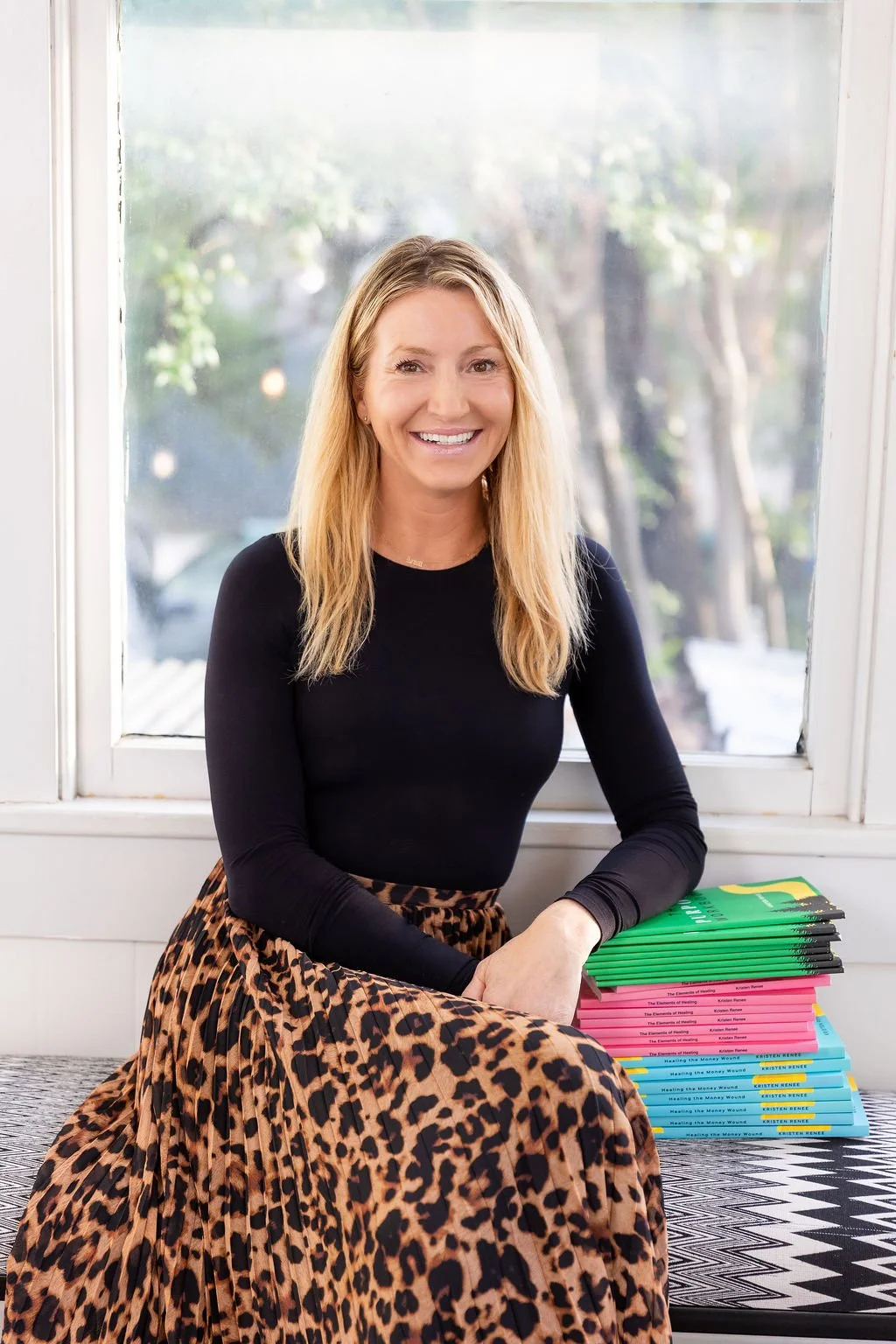
To learn more about Kristen's books, including The Elements of Healing, Healing the Money Wound and The Purpose Workbook, visit Kristen Renee Rebuilding, follow her on Instagram or join The Rebuild Collective on Substack.
Support the show
If you’re enjoying the podcast and getting something out of these conversations, you can support The True Form Podcast with a monthly contribution. It helps me bring on great guests, reach more people and keep these conversations going.
No pressure, but it genuinely makes a difference. Thanks for being part of it.
Sponsor: If you’re interested in trying red and near-infrared light therapy for recovery, pain, and overall health, check out Lumaflex. Use code TRUEFORM for 10% off: https://lumaflex.com.au/TRUEFORM