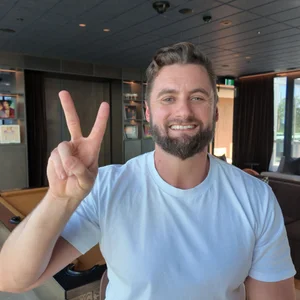
You Have the Right to Create: Lessons from Ben Rennie
How one author's promise to his dying mother became a handbook for reclaiming your creative confidence
Watch On YouTube
〰️
Watch On YouTube 〰️
TL;DR
Creativity is not a talent; it is a belief that you have the right to make things in the first place.
Fear and curiosity cannot coexist; chasing curiosity is one of the most practical tools for moving forward.
A personal manifesto is not a motivational poster; it is a decision-making filter that keeps you honest.
The periods of life that look the least "successful" from the outside are often the richest from the inside.
Writing down what you want and meaning it shapes the choices and attention that make it happen.
🎧 Available on Spotify, Apple Podcasts, YouTube or wherever you listen to your podcasts.
Introduction
What if the thing that looked like the worst time of your life- no money, no plan, a foreign country- turned out to be the richest?
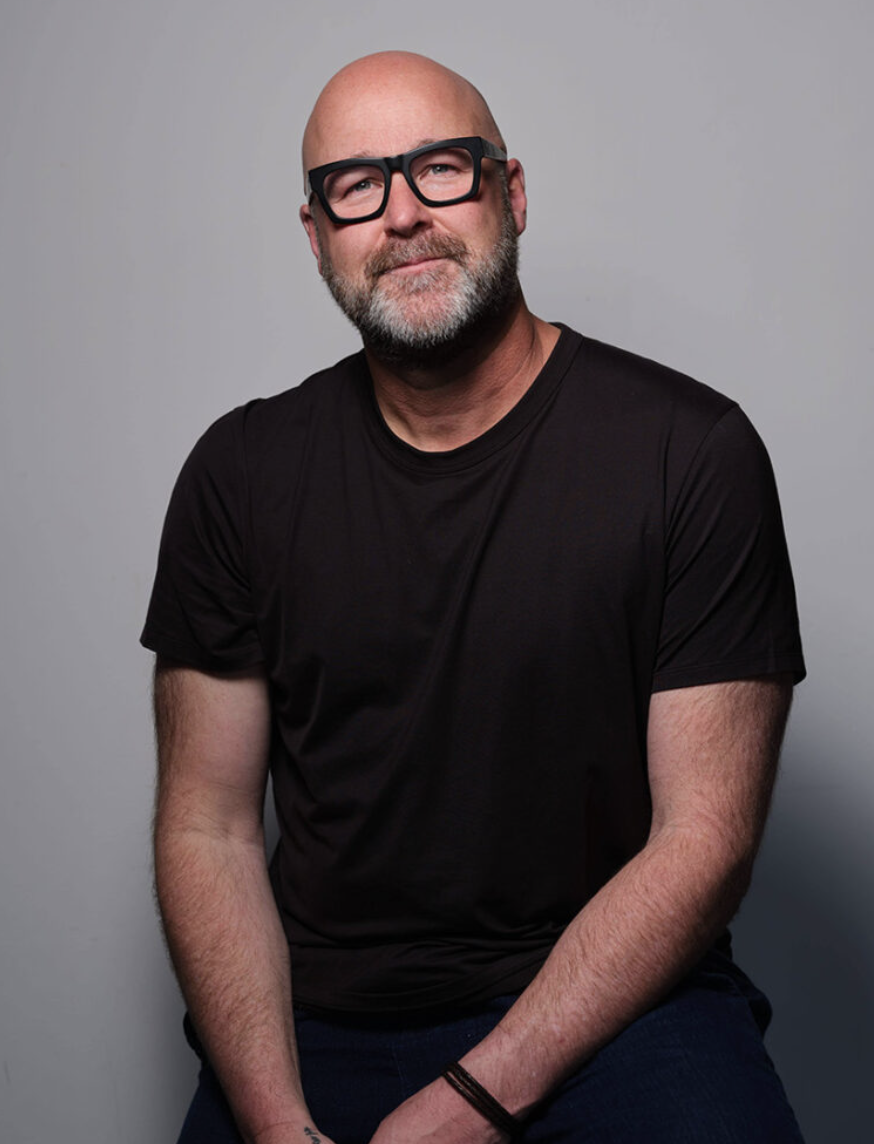
That is not a rhetorical question for Ben Rennie. It is a lived one. Ben is a designer, strategist, speaker, and author whose book Lessons in Creativity began as a deathbed promise to his mum, was deleted and rewritten from near-scratch, and ended up in the hands of women in their 50s and 60s who wrote to tell him they never knew they had the right to create.
Jack Graham had Ben on The True Form Podcast after Lessons in Creativity changed how he thinks about creativity, not just in business but in what makes a life feel like it is actually being lived. This is not an episode about art or design. It is about the quiet belief system underneath everything you do, the stories you carry from your family, and why the work that scares you is almost always the work worth doing.
If you have ever talked yourself out of starting something a business, a podcast, a book, a conversation this episode is for you.
Listen On Apple Podcast
〰️
Listen On Apple Podcast 〰️
Listen On Spotify
〰️
Listen On Spotify 〰️
Lesson 1: Creativity Is Not Art; It Is the Belief That You Have the Right to Make Things
What It Is: Most people define creativity as a skill or a talent, something you either have or you do not. Ben Rennie disagrees. To him, creativity is a belief: the belief that you have the right to start a business, write a book, make a podcast, or coach other people.
Why It Matters: If you frame creativity as a talent, only a select few qualify. If you frame it as a right, everyone qualifies. Ben references in his book that 96% of children believe they are creative. Most adults do not. Something happened between childhood and adulthood that stole that belief. The moment you reclaim it, the doorway opens.
"People think creativity is art. I believe creativity is the belief that we have the right to do art in the first place." - Ben Rennie
How To Apply It:
Write down one thing you have been putting off because you did not feel "qualified."
Ask yourself honestly: is the blocker a skills gap, or a belief gap?
Find one person who has done something similar and is clearly not a genius. Notice that they started anyway.
Give yourself explicit permission. Say it out loud if you have to: "I have the right to try this."
Take one small action, even just researching the first step, that treats the thing as real.
Pro Tip: You do not need to feel confident before you start. Confidence is a consequence of action, not a prerequisite.
Try This Today: Write the sentence "I have the right to _" and fill in the blank with the thing you have been deferring.
Lesson 2: Fear and Curiosity Cannot Coexist, So Choose Curiosity
What It Is: Fear and curiosity are competing forces that cannot occupy the same space at the same time. You are either really scared, which means you are not curious, or you are really curious, which means you are not scared. Creativity lives in the space between them.
Why It Matters: Most advice about overcoming fear tells you to push through it. Ben's framework is different: it does not tell you to ignore fear; it tells you to redirect your attention. When you genuinely focus on what might go right, who might show up, what you might discover, the fear does not disappear through willpower. It dissolves on its own.
"If I chase the curiosity, what I learned, fear dissipates. It actually goes away. They can't coexist." - Ben Rennie
The example he gives is real and specific: preparing a talk for Melbourne Design Week with 60 tickets to sell. His brain immediately told him it would be embarrassing, that only eight people would show. But curiosity asked a different question: what if 25 people come? Who are those people? What conversations happen after?
How To Apply It:
When you notice fear about a project or decision, write down exactly what you are afraid of.
Then write down what you are curious about in the same situation. What could go right? What could you learn?
Read both lists. Notice which one is longer; that is usually where your attention has been living.
Make a deliberate choice to act on one item from the curiosity list in the next 24 hours.
Check in after. Did the fear shrink when you moved toward the curiosity?
Pro Tip: Fear is not a signal to stop; it is often a signal that there is a real gap, and a real opportunity, on the other side.
Try This Today: Think of one thing you have been avoiding. Write down three things you are genuinely curious about in relation to it.
Lesson 3: "Broke" Is a Moment in Time "Poor" Is an Inherited Story
What It Is: Ben's father drew a sharp distinction between being poor and being broke. Being poor is an inherited belief that you cannot escape your circumstances. Being broke is a moment in time, temporary, survivable, and not a reflection of who you are.
Why It Matters: The stories we inherit from our families shape how we relate to risk, money, and our own potential. If the inherited story is "we don't do that sort of thing" or "people like us can't," then every creative leap feels like a violation of something fundamental. Naming the story is the first step to deciding whether you want to keep it.
"We're not poor, we're broke. Poor is this inherited belief that we can't get out of this trap. Broke is a moment in time; this too will pass." - Ben Rennie's father
How To Apply It:
Write down the money or creative risk stories you heard most often growing up, without judgement.
Ask: Are these stories still true for you today, or are they inherited defaults?
Separate "broke" (a current, temporary state) from "poor" (a fixed identity).
Identify one belief about what you "can" or "cannot" do that came from outside you. Question it.
Pro Tip: You do not have to reject where you came from to choose a different story going forward.
Lesson 4: The Richest Periods of Life Rarely Look Rich from the Outside
What It Is: Ben left a $1M consultancy, clients included Westpac, Gulf Oil, and Australia Post, because he was miserable. He took his family to Lake Tahoe for what was meant to be one month. It became three. They had almost nothing financially. He skied with the kids all day and worked with Australian clients from 2 pm. He calls it the richest period of his life.
Why It Matters: We tend to measure the quality of a period by external markers: income, title, prestige. A reviewer later dismissed the Lake Tahoe story as the indulgence of a "rich guy" who could afford to travel and snowboard with his kids. Ben's response: they had nothing. It was foraging.
"This period of my life was the richest I've ever been." - Ben Rennie
How To Apply It:
Think back to a period that looked unremarkable or even like a failure from the outside. What was actually going on inside it?
Identify what made it rich, presence, freedom, connection, clarity.
Ask yourself: where are you currently trading presence for appearance?
Find one place in your life right now where you can add presence without overhauling everything.
Pro Tip: The work that scares you is often the work that makes you most present. Presence does not require financial security.
Lesson 5: A Personal Manifesto Is a Decision-Making Tool, Not a Motivational Poster
What It Is: A personal manifesto or value statement is a short, written list of what you stand for and will not compromise on. Ben wrote his about four years ago: seven things. When an opportunity does not align with it, he does not take it.
Why It Matters: Without a written value statement, decisions get made by default, by urgency, flattery, or whoever is in the room. A manifesto is a pre-commitment device: what you agreed with yourself in a clear moment, before the pressure arrived. It is also what you return to when something goes badly and ask honestly, did my values actually align with this?
Ben tells the story of an organisation that had spent $100,000 on workshops trying to find their manifesto. He sat with them at a coffee shop, listened, and wrote it on a napkin. Three points were agreed on immediately. They workshopped the other two. Done.
How To Apply It:
Set aside 30 minutes somewhere quiet.
Write down five to seven things you know, without doubt, that you care about, as a professional and as a person.
Write each as a single sentence clear enough that someone else could understand it.
Test it against a recent decision. If it does not align, ask why.
Keep it somewhere visible as a reference, not decoration.
Review it every six months.
Pro Tip: The clearest sign your manifesto is working is when you say no to something that would have previously felt hard to decline.
Try This Today: Write three values you hold with certainty, honest ones, not aspirational ones.
Lesson 6: Intention Sets the Direction, Even Before You Have a Plan
What It Is: Execution starts with intention, a clear sense of why you are doing something and what you want your life to look like as a result. Ben's vision board from 18 months ago listed three things: sit on paid advisory boards, write another book, lecture at a university. He now lectures at UNSW. It arrived because the intention shaped his choices and attention.
Why It Matters: Most people wait for a plan before they set an intention. Ben reverses the order. You set the intention first, clearly, specifically, written down, and the intention begins to filter what you notice, what you say yes to, and who you end up talking to.
"The intention alone is the thing that creates the momentum to continue." - Ben Rennie
How To Apply It:
Write down three specific things you want your life or work to include in the next 12-18 months. Be concrete, not "be successful" but "lecture at a university" or "sign two advisory roles."
Put them somewhere you see regularly.
When an opportunity comes up, ask: does this move me toward one of those three things?
Start something related to one of them this week: a conversation, a draft, an email.
Pro Tip: Intentions work because they shape attention, not because they are wishes. You still have to act; the difference is that your action has a direction.
Mini Case: The Daughter Who Wrote It on Her Vision Board
Ben's daughter wrote on her vision board that she wanted to present a major sporting event and be an anchor. In her early twenties, she went on to present for Channel Nine's Wide World of Sports alongside Mark Taylor and Tim Horn, and covered the Olympics.
Ben's role, as he describes it, was not to make it happen for her. It was to say "you're going to get that" and mean it.
The lesson is not about talent. It is about creative confidence, the kind that comes from being raised in an environment where someone takes your ideas seriously before there is any evidence they will work.
Quick Wins Checklist (Do These Today)
Write one sentence giving yourself explicit permission to start the thing you have been deferring.
List three things you are curious about in relation to one project or decision you have been avoiding.
Write down three values you hold with certainty, honest ones, not aspirational ones.
Identify one belief about what you "can" or "cannot" do that was handed to you rather than chosen.
Write one specific, concrete thing you want your life or work to include in the next 12-18 months.
Tell one person about it. Saying it out loud is part of setting the intention.
Closing Insight
Ben Rennie did not set out to write a book about creativity. He set out to keep a promise to his mum. What he found in the process, in the deletion of 38,000 words, in three months at Lake Tahoe, in a DNA test that revealed a family history nobody had spoken of… was that creativity was the thread running through all of it. Not art, not design, not business strategy, but the simple, radical belief that you have the right to make something. That belief is not innate. It is cultivated by the people around you, by the stories you keep, and by the things you write down and mean. If 96% of children believe they are creative and most adults do not, something happened in between. The work, according to Ben, is going back and reclaiming it, not for the sake of a career, but for the sake of a life.
🎧 Available on Spotify, Apple Podcasts, YouTube or wherever you listen to your podcasts.
Watch me on YouTube
Listen to the True From Podcast:
Apple Podcast -
https://podcasts.apple.com/au/podcast/the-true-form-podcast/id1593804496
Spotify -
https://open.spotify.com/show/6RVH2O6MbLOCohBKPhXO0L?si=ZI8D3MnhSfSjnohSXYN_MQ
Everywhere els -
https://trueform.buzzsprout.com
Sponsor: If you’re interested in trying red and near-infrared light therapy for recovery, pain, and overall health, check out Lumaflex. Use code TRUEFORM for 10% off: https://lumaflex.com.au/TRUEFORM